


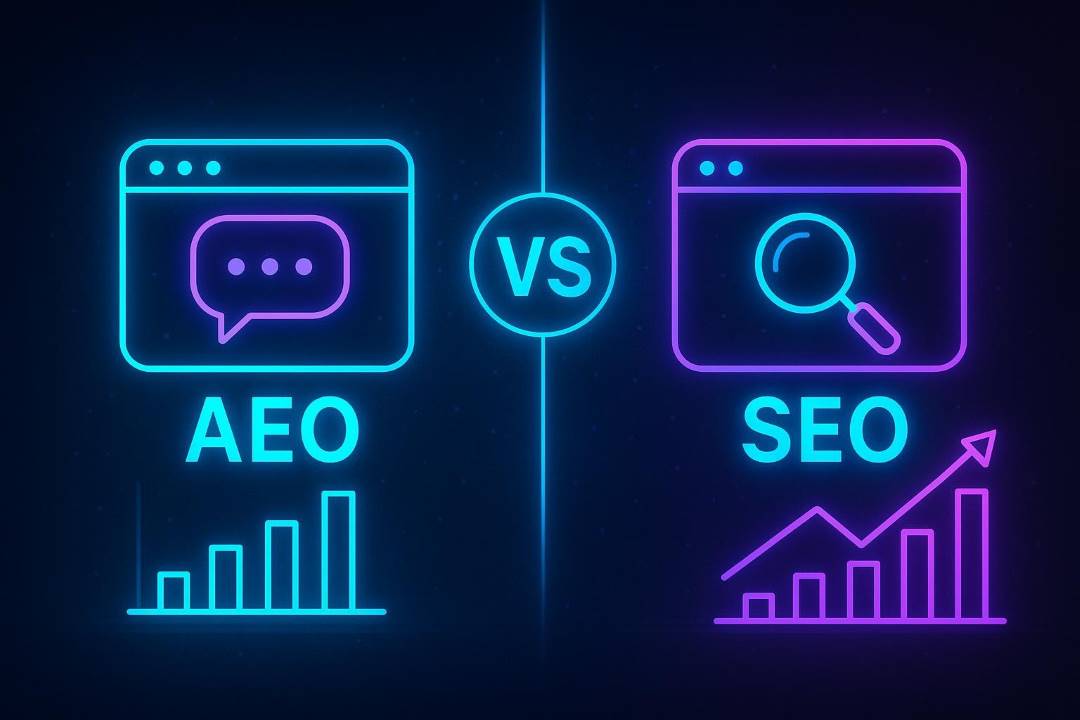
Search teams face a new split. AEO aims to win quick answers in chat and voice, while SEO aims to earn clicks from results pages. Both can drive growth. Generally, AEO fits info questions, and SEO fits buy ready searches on product pages.
You write tight answer blocks, or you write deep guides that build real trust. Meanwhile, keywords need to feel more human today. When you give clear facts, answer engines cite you, and search engines rank you for wider reach.
As a result, you get the best results when you blend both plans. So you start by clearing up their core goals and focus.
AEO and SEO: Different Goals and Focus
The goal of SEO is high ranks, while AEO aims to get your facts cited in AI answers and shown with your source. In both cases, you can track wins. There’s still a three step click path in SEO, but AEO targets question to answer flows with source mentions.
So is your page built for both after a reload? You use keywords and links, but AEO leans on schema and meaning. As a result, their goals feel different. With SEO, you win with ranks and free clicks, while AEO tracks mentions, cites, and an AI Visibility Score.
Ultimately, it’s SEO plus AEO.
Target Queries: Informational vs. Transactional
Intent shapes your next click. You check info and test E-E-A-T with it. Meanwhile, voice asks it in a long, exact way. You use buy searches for fast action. Best pages match intent, and brand names add trust.
SparkToro says over 50% of searches end in zero-click results. As a result, structured data helps LLMs cite you in answers. It’s SaaS SEO that turns organic traffic into leads.
You can still create on-page cues like title tags plus off-page links that guide leads from Google and Bing.
Content Structure: Concise Answers vs. In-Depth Guides
Answer first content changes what you see, so it cuts wait time. The best pages give you the answer fast, before your coffee cools. This means there’s less scrolling needed. For AEO pages, you put the short answer right under the heading.
Then you add proof, so you trust it fast and stay on the page. W3Techs reports Schema.org is on about 43% of sites, and it helps long guides stay easy to parse. That way, you skim in your own time. Nielsen Norman Group says you take in about 20% of the words, so your lead answer must stand.
Keyword Strategy: Conversational Phrases vs. High-Volume Keywords
Next comes your keyword pick. The shift to AEO favors phrases that sound like real questions you ask while you make coffee alone today. This is plain in logs. There’s less room now for stiff head terms that miss the way you ask for help online.
They still matter, yet you often see 2x leads from longer phrases. Their volume can be huge, yet Search Engine Land notes click share drops fast once pages show rich features. So is your best bet a mix by page type?
The trick is to watch how you phrase it. Pew Research Center puts voice use near 40%, so you win with chatty phrases.
Integration: Combining AEO and SEO Strategies
Start with shared goals. You mix quick answers with deep pages, like “what is’ schema markup” for traffic. This mix cuts friction fast. It also fits how 58% of searches sound like talk. To keep SEO traffic strong, you still build guides since organic search drives about 53% of all site visits.
Then you add Q&A blocks with schema markup to lift your lines into zero click spots. So you guess less. Your users back you up; hybrid pages can raise click through rates by 14% and 83% say you prefer AI search.
For most brands, AEO and SEO work best as one team. SEO still builds demand with pages, while AEO wins fast answers in voice and AI results. First, pick one goal now. In audits, we see pages with schema and clear FAQs lift featured snippet wins by 20% to 30% fast.
For buying terms, you can use SEO and fast pages to raise organic revenue. Meanwhile, AEO can cut support tickets with direct how to answers. Track both in one dashboard. If you align your content to questions, you get traffic and trust.