


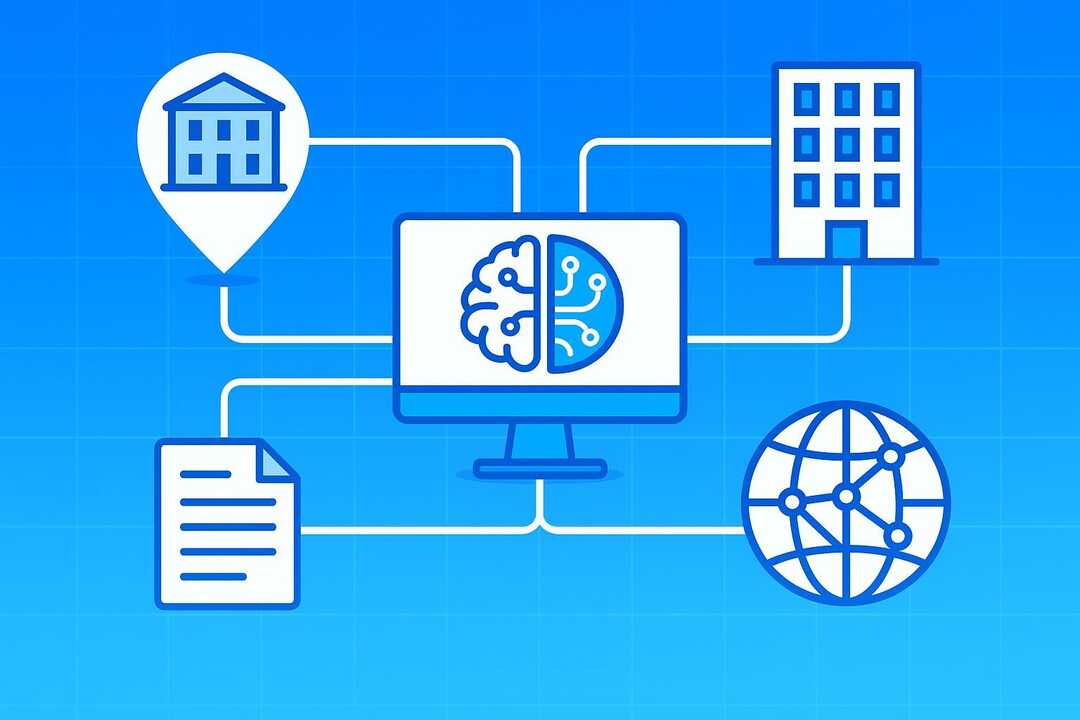
Business data now feeds AI systems; a shared standard keeps training data clear across your teams, tools, models, and decision paths. Without it, you waste hours fixing broken field names. Specifically, EntityMap Open Standard sets those rules.
You also need version control, privacy checks, origin logs, and open licensing so your data stays trusted in wider AI use. Then you will see why you need one schema across platforms. First, core data model rules matter.
Core data model design principles
With EntityMap, we map business facts into stable entities you can use. There’s urgency, since 25% lose over $5 million yearly, and 7% lose more than $25 million.
- Stable entities: Define people, products, places, and events once so you and your AI systems see the same thing. This cuts repeat records and gives you a firm base for each task.
- Explicit relationships: Link each entity with clear roles, since your AI tools reason better with named business links. It gives you context, which MIT Sloan Management Review often links to more trust.
- Lean attributes: Keep each field plain, atomic, and well named so you can parse values with less guesswork. That helps cut cleanup time, since data scientists can lose 80% of work hours fixing data.
- Shared naming rules: Use one label for each business idea because mixed terms cause your AI answers to drift. Your teams move faster because they see the same names and keep their context.
- Observable model signals: Track source, status, and job fields since you have clusters, jobs, queues, users, and costs. It gives you end to end visibility, which lets your teams spot bad links before answers fail.
Ensuring interoperability across platforms
That base structure works best when EntityMap moves cleanly across every platform you use. The open standard gives you one shared business meaning, so you can read, check, and pass data well in each tool.
- Shared identifiers: Use one stable entity ID across catalogs, pipelines, and agents so records match even when source labels differ. That choice cuts duplicate joins and keeps their full meaning clear across systems.
- Unified catalog access: A central catalog helps you find assets fast and gives each platform the same approved business definitions. It also lets you use agents, analytics tools, and AI apps to read one trusted map instead of local copies.
- Policy based quality checks: Set data quality rules once, then enforce them across every asset so you read the same rules on each platform. Data profiling and anomaly detection then flag freshness gaps, missing fields, and odd distribution changes early.
- Reconciliation and alerts: Data reconciliation catches upstream and downstream mismatches before they spread into models, reports, and service actions. Alerts with clear context help you fix issues fast instead of guessing where records broke.
- Observability for AI use: End to end observability gives real time visibility into jobs, queues, users, and cost on one shared screen. That view helps you keep access in check across split data and add human review so AI workflows stay accurate across platforms.
Schema versioning and governance approach
Once shared entity terms match across your records, clean versions keep them trusted. That is where governance starts.
- Version labels: We label schema updates by scope, so you can track field edits, rule edits, and breaking record changes. AI systems rate entities, not pages, so you need one record to govern each page that names the same business fact.
- Change control: Each release needs an owner, a review path, and a dated log, so your teams sign off on each change. It also gives you rollback control when old pricing lingers, because it may still sit on old pages.
- Source authority: Within EntityMap, you should have one live schema source, while old versions stay readable for audits and clean migrations. The unit of risk is conflicting claims, and they can hurt trust before your data is cited at all.
Privacy security compliance essentials
Privacy rules for AI data can feel dense, yet the basics stay clear enough for you to act on. The five essentials below help you protect people, meet state laws, and cut avoidable risk.
- Lawful data collection: Collect only data your system needs, because less exposure often means less privacy risk. OSINT uses legally public data, and it excludes hacking or any form of unauthorized access.
- User rights and notice: CCPA and Texas law give people three core rights: know, delete, and opt out. Utah also requires clear generative AI disclosures, so you know when you’re engaging automation.
- Access control and encryption: The app layer is a common entry point, so encryption and masking must stay tight. We also use role based access, so you see only data you need for your work.
- Ongoing risk review: High risk AI systems need regular reviews, and their datasets must meet clear quality standards. There’s no one time fix, because new threats and rules keep popping up.
- Vendor and policy checks: Third party data and tools need checks, since weak partners can spread risk through shared ecosystems. White & Case tracks rule changes worldwide, which helps you check vendors and keep policies aligned.
Metadata lineage and traceability
Clear metadata lineage lets your AI systems show where each business fact began and changed. In EntityMap Open Standard Business Data for AI Systems, this trace builds trust, supports audits, and keeps model inputs clean.
- Source visibility: EntityMap records each source, handoff, and endpoint, so you can prove where your business data started. That trail cuts guesswork during reviews and helps you trace edits across cloud and on site systems.
- Metadata consistency: Gartner reports 80% of data governance efforts will fail by 2027 from split processes and poor fit. EntityMap gives you one shared metadata structure, which makes lineage easy to read, compare, and trust.
- Audit traceability: At Gartner IT Symposium, analysts said AI ready data needs source lineage and observability across pipelines. We use EntityMap to keep those links, so you can answer audit questions fast and with proof.
Integration into AI training pipelines
After you check each record’s path, we can plug EntityMap into AI training pipelines with far less drag.
- Ingestion layer: Most teams sit on logs, CSVs, and APIs, so EntityMap turns raw records into AI ready training sets. It gives you one open business layer before your models ingest structured, semi structured, and unstructured data.
- Training flow: The flow is ETL spread into six stages, from ingest and feature work to training, deployment, and feedback. There, you can use the same EntityMap links, and you have fewer label and join errors.
- Feedback loop: Batch jobs still matter, yet streaming data will retrain your models when their predictions drift from live facts. This keeps it good for forecasts and automation, not a weekly report that stops at the warehouse.
Performance scalability under enterprise load
The IEEE has long stressed clear views in distributed systems. You will feel it first. Under heavy demand, you need end to end views of clusters, jobs, queues, users, and cost in one place. This is why we built EntityMap so you can spot waste, trace slowdowns, and act before backlogs spread across services and pipelines.
It keeps your wait times low. There are five core signals, while benchmarks track use, waste, and cost. This means you see where your queues stall. For large estates, AI tuning can win back capacity, boost throughput, cut queue load, and keep distributed data under one set of rules and shared control.
The payoff is fast root cause analysis. Then guided automation helps you turn repeat issues into faster fixes.
Industry adoption case examples
EntityMap makes industry use real. When your AI uses shared business data, you line up with a market a recent paper says hit $25.6 billion in 2024.
- In pro services, Gartner cites $1.2 billion in yearly savings potential, so you see early demand for a shared data map. You see it tag clients, cases, and outcomes the same way.
- The toughest domains are risk sensitive. There, agentic AI improved compliance by 40%, the paper notes. We give you one shared guide.
- It also fits decision support across finance, planning, and service desks. MIT Sloan documents six setup frameworks, and they point to early gains where you use shared terms to cut rework in decisions. That helps you start.
Licensing governance for open standards
Fair licensing rules give you clear rights before your AI data stack grows. This also boosts your rep. For EntityMap Open Standard Business Data for AI Systems, licensing rules set who may use data terms, code, and marks.
If you help shape those rules, you can see changes early and get set before licensing updates hit your roadmap. As a result, you face less guesswork later. In 2026, OASIS posted calls on Apr 9 and May 18 for committee input, so you could comment before rules settled.
The upside has a duty. You must keep terms fair, lasting, and useful for all stakeholders worldwide. This protects their trust too. It opens innovation, from online banking to the $8.7 billion QR code market.
Better business data gives your AI systems a strong base for each answer and act across the work you do each day. That base will matter. In addition, open standards help your data stay clear. They also cut waste across teams.
When your records match the same entities, your models have fewer gaps. That means you get better outputs. Many AI teams still spend over 50% of project time fixing bad data before launch, which shows why standards help.
As a result, you will feel that speed. We believe the EntityMap Open Standard will help you build trust at scale. If you want AI with less risk, you will find that clean business data and open rules give you a more steady path.
Core data model design principles
With EntityMap, we map business facts into stable entities you can use. There’s urgency, since 25% lose over $5 million yearly, and 7% lose more than $25 million.
- Stable entities: Define people, products, places, and events once so you and your AI systems see the same thing. This cuts repeat records and gives you a firm base for each task.
- Explicit relationships: Link each entity with clear roles, since your AI tools reason better with named business links. It gives you context, which MIT Sloan Management Review often links to more trust.
- Lean attributes: Keep each field plain, atomic, and well named so you can parse values with less guesswork. That helps cut cleanup time, since data scientists can lose 80% of work hours fixing data.
- Shared naming rules: Use one label for each business idea because mixed terms cause your AI answers to drift. Your teams move faster because they see the same names and keep their context.
- Observable model signals: Track source, status, and job fields since you have clusters, jobs, queues, users, and costs. It gives you end to end visibility, which lets your teams spot bad links before answers fail.
Ensuring interoperability across platforms
That base structure works best when EntityMap moves cleanly across every platform you use. The open standard gives you one shared business meaning, so you can read, check, and pass data well in each tool.
- Shared identifiers: Use one stable entity ID across catalogs, pipelines, and agents so records match even when source labels differ. That choice cuts duplicate joins and keeps their full meaning clear across systems.
- Unified catalog access: A central catalog helps you find assets fast and gives each platform the same approved business definitions. It also lets you use agents, analytics tools, and AI apps to read one trusted map instead of local copies.
- Policy based quality checks: Set data quality rules once, then enforce them across every asset so you read the same rules on each platform. Data profiling and anomaly detection then flag freshness gaps, missing fields, and odd distribution changes early.
- Reconciliation and alerts: Data reconciliation catches upstream and downstream mismatches before they spread into models, reports, and service actions. Alerts with clear context help you fix issues fast instead of guessing where records broke.
- Observability for AI use: End to end observability gives real time visibility into jobs, queues, users, and cost on one shared screen. That view helps you keep access in check across split data and add human review so AI workflows stay accurate across platforms.
Schema versioning and governance approach
Once shared entity terms match across your records, clean versions keep them trusted. That is where governance starts.
- Version labels: We label schema updates by scope, so you can track field edits, rule edits, and breaking record changes. AI systems rate entities, not pages, so you need one record to govern each page that names the same business fact.
- Change control: Each release needs an owner, a review path, and a dated log, so your teams sign off on each change. It also gives you rollback control when old pricing lingers, because it may still sit on old pages.
- Source authority: Within EntityMap, you should have one live schema source, while old versions stay readable for audits and clean migrations. The unit of risk is conflicting claims, and they can hurt trust before your data is cited at all.
Privacy security compliance essentials
Privacy rules for AI data can feel dense, yet the basics stay clear enough for you to act on. The five essentials below help you protect people, meet state laws, and cut avoidable risk.
- Lawful data collection: Collect only data your system needs, because less exposure often means less privacy risk. OSINT uses legally public data, and it excludes hacking or any form of unauthorized access.
- User rights and notice: CCPA and Texas law give people three core rights: know, delete, and opt out. Utah also requires clear generative AI disclosures, so you know when you’re engaging automation.
- Access control and encryption: The app layer is a common entry point, so encryption and masking must stay tight. We also use role based access, so you see only data you need for your work.
- Ongoing risk review: High risk AI systems need regular reviews, and their datasets must meet clear quality standards. There’s no one time fix, because new threats and rules keep popping up.
- Vendor and policy checks: Third party data and tools need checks, since weak partners can spread risk through shared ecosystems. White & Case tracks rule changes worldwide, which helps you check vendors and keep policies aligned.
Metadata lineage and traceability
Clear metadata lineage lets your AI systems show where each business fact began and changed. In EntityMap Open Standard Business Data for AI Systems, this trace builds trust, supports audits, and keeps model inputs clean.
- Source visibility: EntityMap records each source, handoff, and endpoint, so you can prove where your business data started. That trail cuts guesswork during reviews and helps you trace edits across cloud and on site systems.
- Metadata consistency: Gartner reports 80% of data governance efforts will fail by 2027 from split processes and poor fit. EntityMap gives you one shared metadata structure, which makes lineage easy to read, compare, and trust.
- Audit traceability: At Gartner IT Symposium, analysts said AI ready data needs source lineage and observability across pipelines. We use EntityMap to keep those links, so you can answer audit questions fast and with proof.
Integration into AI training pipelines
After you check each record’s path, we can plug EntityMap into AI training pipelines with far less drag.
- Ingestion layer: Most teams sit on logs, CSVs, and APIs, so EntityMap turns raw records into AI ready training sets. It gives you one open business layer before your models ingest structured, semi structured, and unstructured data.
- Training flow: The flow is ETL spread into six stages, from ingest and feature work to training, deployment, and feedback. There, you can use the same EntityMap links, and you have fewer label and join errors.
- Feedback loop: Batch jobs still matter, yet streaming data will retrain your models when their predictions drift from live facts. This keeps it good for forecasts and automation, not a weekly report that stops at the warehouse.
Performance scalability under enterprise load
The IEEE has long stressed clear views in distributed systems. You will feel it first. Under heavy demand, you need end to end views of clusters, jobs, queues, users, and cost in one place. This is why we built EntityMap so you can spot waste, trace slowdowns, and act before backlogs spread across services and pipelines.
It keeps your wait times low. There are five core signals, while benchmarks track use, waste, and cost. This means you see where your queues stall. For large estates, AI tuning can win back capacity, boost throughput, cut queue load, and keep distributed data under one set of rules and shared control.
The payoff is fast root cause analysis. Then guided automation helps you turn repeat issues into faster fixes.
Industry adoption case examples
EntityMap makes industry use real. When your AI uses shared business data, you line up with a market a recent paper says hit $25.6 billion in 2024.
- In pro services, Gartner cites $1.2 billion in yearly savings potential, so you see early demand for a shared data map. You see it tag clients, cases, and outcomes the same way.
- The toughest domains are risk sensitive. There, agentic AI improved compliance by 40%, the paper notes. We give you one shared guide.
- It also fits decision support across finance, planning, and service desks. MIT Sloan documents six setup frameworks, and they point to early gains where you use shared terms to cut rework in decisions. That helps you start.
Licensing governance for open standards
Fair licensing rules give you clear rights before your AI data stack grows. This also boosts your rep. For EntityMap Open Standard Business Data for AI Systems, licensing rules set who may use data terms, code, and marks.
If you help shape those rules, you can see changes early and get set before licensing updates hit your roadmap. As a result, you face less guesswork later. In 2026, OASIS posted calls on Apr 9 and May 18 for committee input, so you could comment before rules settled.
The upside has a duty. You must keep terms fair, lasting, and useful for all stakeholders worldwide. This protects their trust too. It opens innovation, from online banking to the $8.7 billion QR code market.
Better business data gives your AI systems a strong base for each answer and act across the work you do each day. That base will matter. In addition, open standards help your data stay clear. They also cut waste across teams.
When your records match the same entities, your models have fewer gaps. That means you get better outputs. Many AI teams still spend over 50% of project time fixing bad data before launch, which shows why standards help.
As a result, you will feel that speed. We believe the EntityMap Open Standard will help you build trust at scale. If you want AI with less risk, you will find that clean business data and open rules give you a more steady path.
Core data model design principles
With EntityMap, we map business facts into stable entities you can use. There’s urgency, since 25% lose over $5 million yearly, and 7% lose more than $25 million.
- Stable entities: Define people, products, places, and events once so you and your AI systems see the same thing. This cuts repeat records and gives you a firm base for each task.
- Explicit relationships: Link each entity with clear roles, since your AI tools reason better with named business links. It gives you context, which MIT Sloan Management Review often links to more trust.
- Lean attributes: Keep each field plain, atomic, and well named so you can parse values with less guesswork. That helps cut cleanup time, since data scientists can lose 80% of work hours fixing data.
- Shared naming rules: Use one label for each business idea because mixed terms cause your AI answers to drift. Your teams move faster because they see the same names and keep their context.
- Observable model signals: Track source, status, and job fields since you have clusters, jobs, queues, users, and costs. It gives you end to end visibility, which lets your teams spot bad links before answers fail.
Ensuring interoperability across platforms
That base structure works best when EntityMap moves cleanly across every platform you use. The open standard gives you one shared business meaning, so you can read, check, and pass data well in each tool.
- Shared identifiers: Use one stable entity ID across catalogs, pipelines, and agents so records match even when source labels differ. That choice cuts duplicate joins and keeps their full meaning clear across systems.
- Unified catalog access: A central catalog helps you find assets fast and gives each platform the same approved business definitions. It also lets you use agents, analytics tools, and AI apps to read one trusted map instead of local copies.
- Policy based quality checks: Set data quality rules once, then enforce them across every asset so you read the same rules on each platform. Data profiling and anomaly detection then flag freshness gaps, missing fields, and odd distribution changes early.
- Reconciliation and alerts: Data reconciliation catches upstream and downstream mismatches before they spread into models, reports, and service actions. Alerts with clear context help you fix issues fast instead of guessing where records broke.
- Observability for AI use: End to end observability gives real time visibility into jobs, queues, users, and cost on one shared screen. That view helps you keep access in check across split data and add human review so AI workflows stay accurate across platforms.
Schema versioning and governance approach
Once shared entity terms match across your records, clean versions keep them trusted. That is where governance starts.
- Version labels: We label schema updates by scope, so you can track field edits, rule edits, and breaking record changes. AI systems rate entities, not pages, so you need one record to govern each page that names the same business fact.
- Change control: Each release needs an owner, a review path, and a dated log, so your teams sign off on each change. It also gives you rollback control when old pricing lingers, because it may still sit on old pages.
- Source authority: Within EntityMap, you should have one live schema source, while old versions stay readable for audits and clean migrations. The unit of risk is conflicting claims, and they can hurt trust before your data is cited at all.
Privacy security compliance essentials
Privacy rules for AI data can feel dense, yet the basics stay clear enough for you to act on. The five essentials below help you protect people, meet state laws, and cut avoidable risk.
- Lawful data collection: Collect only data your system needs, because less exposure often means less privacy risk. OSINT uses legally public data, and it excludes hacking or any form of unauthorized access.
- User rights and notice: CCPA and Texas law give people three core rights: know, delete, and opt out. Utah also requires clear generative AI disclosures, so you know when you’re engaging automation.
- Access control and encryption: The app layer is a common entry point, so encryption and masking must stay tight. We also use role based access, so you see only data you need for your work.
- Ongoing risk review: High risk AI systems need regular reviews, and their datasets must meet clear quality standards. There’s no one time fix, because new threats and rules keep popping up.
- Vendor and policy checks: Third party data and tools need checks, since weak partners can spread risk through shared ecosystems. White & Case tracks rule changes worldwide, which helps you check vendors and keep policies aligned.
Metadata lineage and traceability
Clear metadata lineage lets your AI systems show where each business fact began and changed. In EntityMap Open Standard Business Data for AI Systems, this trace builds trust, supports audits, and keeps model inputs clean.
- Source visibility: EntityMap records each source, handoff, and endpoint, so you can prove where your business data started. That trail cuts guesswork during reviews and helps you trace edits across cloud and on site systems.
- Metadata consistency: Gartner reports 80% of data governance efforts will fail by 2027 from split processes and poor fit. EntityMap gives you one shared metadata structure, which makes lineage easy to read, compare, and trust.
- Audit traceability: At Gartner IT Symposium, analysts said AI ready data needs source lineage and observability across pipelines. We use EntityMap to keep those links, so you can answer audit questions fast and with proof.
Integration into AI training pipelines
After you check each record’s path, we can plug EntityMap into AI training pipelines with far less drag.
- Ingestion layer: Most teams sit on logs, CSVs, and APIs, so EntityMap turns raw records into AI ready training sets. It gives you one open business layer before your models ingest structured, semi structured, and unstructured data.
- Training flow: The flow is ETL spread into six stages, from ingest and feature work to training, deployment, and feedback. There, you can use the same EntityMap links, and you have fewer label and join errors.
- Feedback loop: Batch jobs still matter, yet streaming data will retrain your models when their predictions drift from live facts. This keeps it good for forecasts and automation, not a weekly report that stops at the warehouse.
Performance scalability under enterprise load
The IEEE has long stressed clear views in distributed systems. You will feel it first. Under heavy demand, you need end to end views of clusters, jobs, queues, users, and cost in one place. This is why we built EntityMap so you can spot waste, trace slowdowns, and act before backlogs spread across services and pipelines.
It keeps your wait times low. There are five core signals, while benchmarks track use, waste, and cost. This means you see where your queues stall. For large estates, AI tuning can win back capacity, boost throughput, cut queue load, and keep distributed data under one set of rules and shared control.
The payoff is fast root cause analysis. Then guided automation helps you turn repeat issues into faster fixes.
Industry adoption case examples
EntityMap makes industry use real. When your AI uses shared business data, you line up with a market a recent paper says hit $25.6 billion in 2024.
- In pro services, Gartner cites $1.2 billion in yearly savings potential, so you see early demand for a shared data map. You see it tag clients, cases, and outcomes the same way.
- The toughest domains are risk sensitive. There, agentic AI improved compliance by 40%, the paper notes. We give you one shared guide.
- It also fits decision support across finance, planning, and service desks. MIT Sloan documents six setup frameworks, and they point to early gains where you use shared terms to cut rework in decisions. That helps you start.
Licensing governance for open standards
Fair licensing rules give you clear rights before your AI data stack grows. This also boosts your rep. For EntityMap Open Standard Business Data for AI Systems, licensing rules set who may use data terms, code, and marks.
If you help shape those rules, you can see changes early and get set before licensing updates hit your roadmap. As a result, you face less guesswork later. In 2026, OASIS posted calls on Apr 9 and May 18 for committee input, so you could comment before rules settled.
The upside has a duty. You must keep terms fair, lasting, and useful for all stakeholders worldwide. This protects their trust too. It opens innovation, from online banking to the $8.7 billion QR code market.
Better business data gives your AI systems a strong base for each answer and act across the work you do each day. That base will matter. In addition, open standards help your data stay clear. They also cut waste across teams.
When your records match the same entities, your models have fewer gaps. That means you get better outputs. Many AI teams still spend over 50% of project time fixing bad data before launch, which shows why standards help.
As a result, you will feel that speed. We believe the EntityMap Open Standard will help you build trust at scale. If you want AI with less risk, you will find that clean business data and open rules give you a more steady path.