


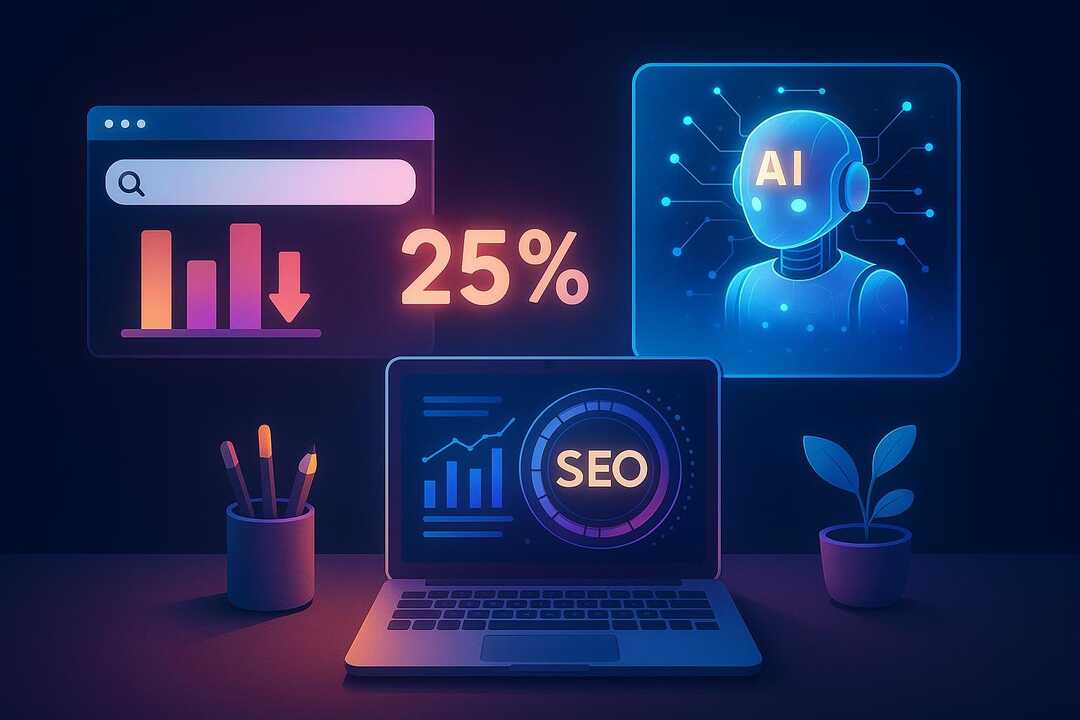
Gartner projects a 25% drop in traditional search volume, and that forecast tells you your SEO plan needs a new base. People now ask machines for answers instead of clicking ten blue links. That change is real and easy to see.
Meanwhile, voice assistants, chat results, and answer engines have trained us to expect fast summaries, so algorithms reward answer ready content over pages. Consequently, semantic search beats exact matches.
Intent signals now guide how we help you stay seen. To stay visible, you will therefore need content built for AI agents, snippets, and multimodal inputs, starting with AI tools that shift how we search.
AI tools changing user search behavior
AI tools are changing how you ask the web for answers. It feels more direct now. Gartner says traditional search volume could fall by 25%, which affects what you trust. As GenAI cuts content costs, Gartner says you will see more same-look pages, so search engines will prize use and quality.
Gartner also says search systems may show AI labels as laws require disclosure, and that will shape what you trust. As a result, there’s more scrutiny on your sources. So, we ground your AI first SEO strategy service in proof.
Voice assistants reducing text query volume
Here is why voice assistants can cut typed searches and what you should fix first.
- Clear context: As voice prompts grow, you need clear labels so assistants know what each page covers. It helps you match spoken questions with the right facts in seconds. There’s less room for vague copy, because short answers need clean context.
- Structured facts: Voice results favor plain text, clean fields, and data machines can read with no guesswork. If your key details sit in images, assistants may miss them and skip you. Reuters coverage has made a projected 25% drop in search volume hard to ignore.
- Web corroboration: Assistants trust you more when other sources repeat your facts across their sites. If your data is split up, there’s a real chance your answer never gets cited. You should audit plain text, structure, and machine readable profiles, because you will miss one.
Semantic search overtaking keyword exact matches
The match rules changed. Gartner says a 25% search drop raises the stakes, so you need AI first SEO built on meaning.
- Context beats repetition: Semantic systems read entities, modifiers, and nearby terms, so one exact phrase matters less than clear topic depth. That is why you should group related terms and answer the full need.
- Natural wording wins: Search systems link close variants, so stiff exact match copy can read odd and lose trust. We see better results when you use headings that mirror how people ask, compare, and decide.
- Meaning links actions: A prompt like scan the code from your device to get it set up holds one task. Semantic search ties code, device, and setup together, even if you use other words.
- Pages must cover use cases: A line about reading and listening in an app shows format and context work together. There, semantic relevance helps you keep your page useful as old searches decline.
Algorithms prioritising AI content over webpages
Algorithms now reward answer ready content. As a result, you will see short Answer Blocks beat pages that hide facts. Princeton University researchers found fact density, with cites and stats, could boost low ranked site views by up to 40%.
Their paper says keyword stuffing had small or bad effects, because models like true facts over pages stuffed for rank. That is why GEO asks you to earn its trust. There’s a bar. SE Ranking says 32,000 referring domains make your cite odds 3.5x higher.
It also cites 190,000 visitors. So, if you want your webpages chosen, you have to format clear 40 to 60 word answers that match the model.
Optimising for AI agents and snippets
Snippets now shape first clicks. Gartner predicts a 25% search drop by 2026, so your AI first SEO plan must earn clean cites.
- Direct answers: Put one plain answer below each heading so you can help AI agents quote it with less risk.
- Entity clarity: Define names, dates, costs, and limits in simple lines because snippets favor exact facts.
- Schema support: Add valid schema for FAQs, posts, and authors so you help machines read your page with fewer gaps.
- Source signals: Cite trusted research, since Gartner says you may see search volume fall 25% by 2026.
- Passage design: Keep paragraphs short, answer one question each, and place the best fact near the top.
Shifting from keywords to intent signals
From that broader view work, intent signs become your next move as Gartner sees old search volume fall 25%.
- Intent clusters: You should group pages by task, need, and rush, because one keyword can miss why you search. Gartner VP Alan Antin said this 25% forecast is tied to answer engines, which makes intent mapping safer.
- Behavior proof: Then you track clicks, return visits, scroll depth, and page paths, because they show if your content did the job. There are over 8 billion searches each day, so weak intent fits will miss your best prospects.
- Result page cues: Next you read the words around results, since mods like cost, near me, and best reveal intent. It helps you write pages that meet needs fast, which we see as the safer long term plan.
Preparing SEO for AI multimodal inputs
Search paths now feel less set. Gartner says traditional search volume will drop 25% soon, and that forecast shifts the whole plan. To prep SEO for AI multimodal inputs, you map assets. Specifically, text alone is no longer enough.
Your pages should pair clean copy with tagged images, short video transcripts, and strong metadata so machines can read their context. Perplexity and ChatGPT are growing fast because you get more chat-like results while Google still works to guard its core model.
As a result, there’s risk if it stays vague.
Gartner’s forecast of a 25% drop in traditional search volume means your SEO plan will need reach beyond blue links. That loss has clear business costs. If you wait, weaker pages will lose reach first.
However, we can help now. Our AI-First SEO Strategy Service aligns your content with new answer paths. We will map user questions to build source depth so your brand has more chances to appear in AI results.
That work has lasting value. As search habits keep changing, you will win more trust when your pages answer people clearly and feed AI systems. With us, your team can measure visibility beyond clicks and rankings.
So start before demand falls.