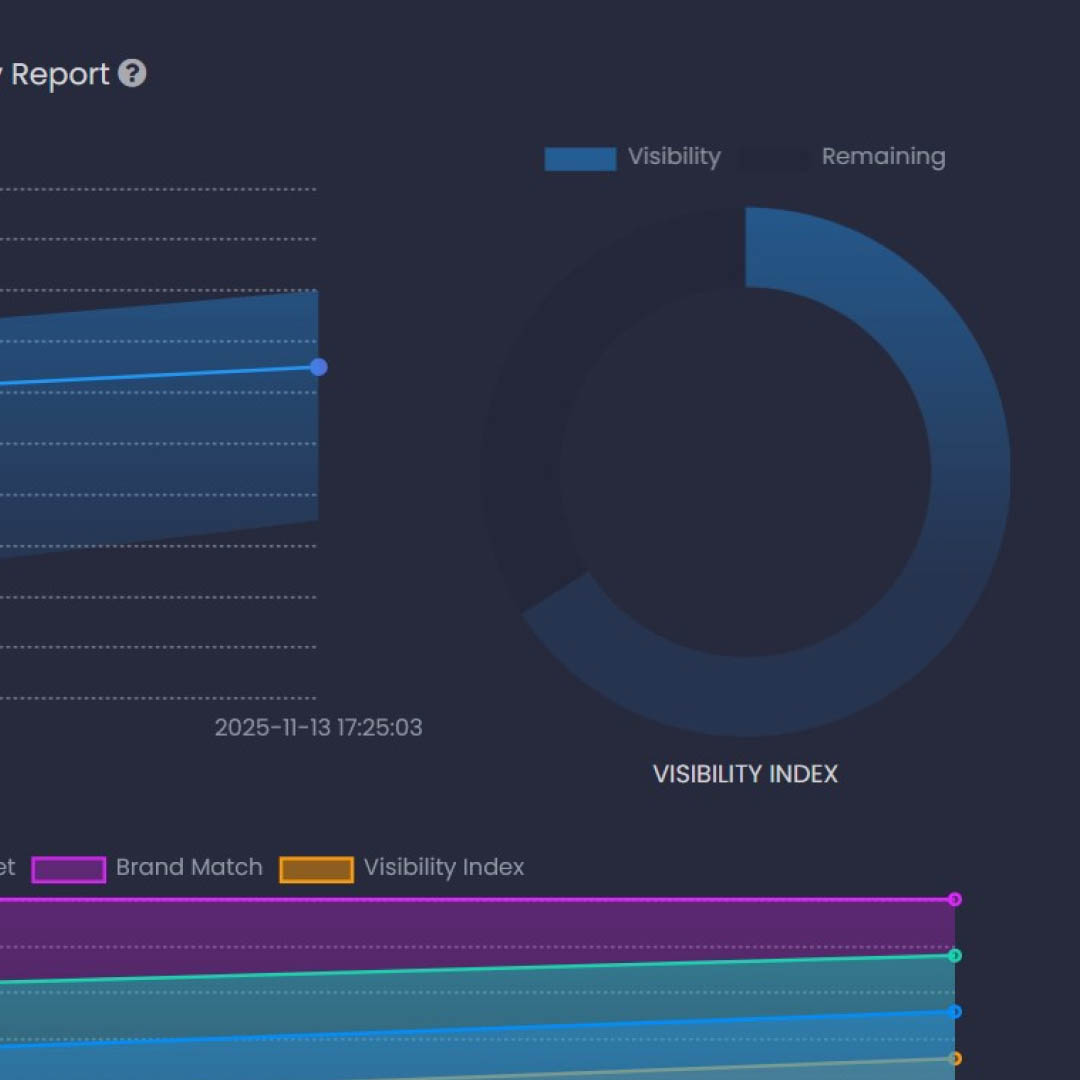
Across AI engines
Know where you stand.
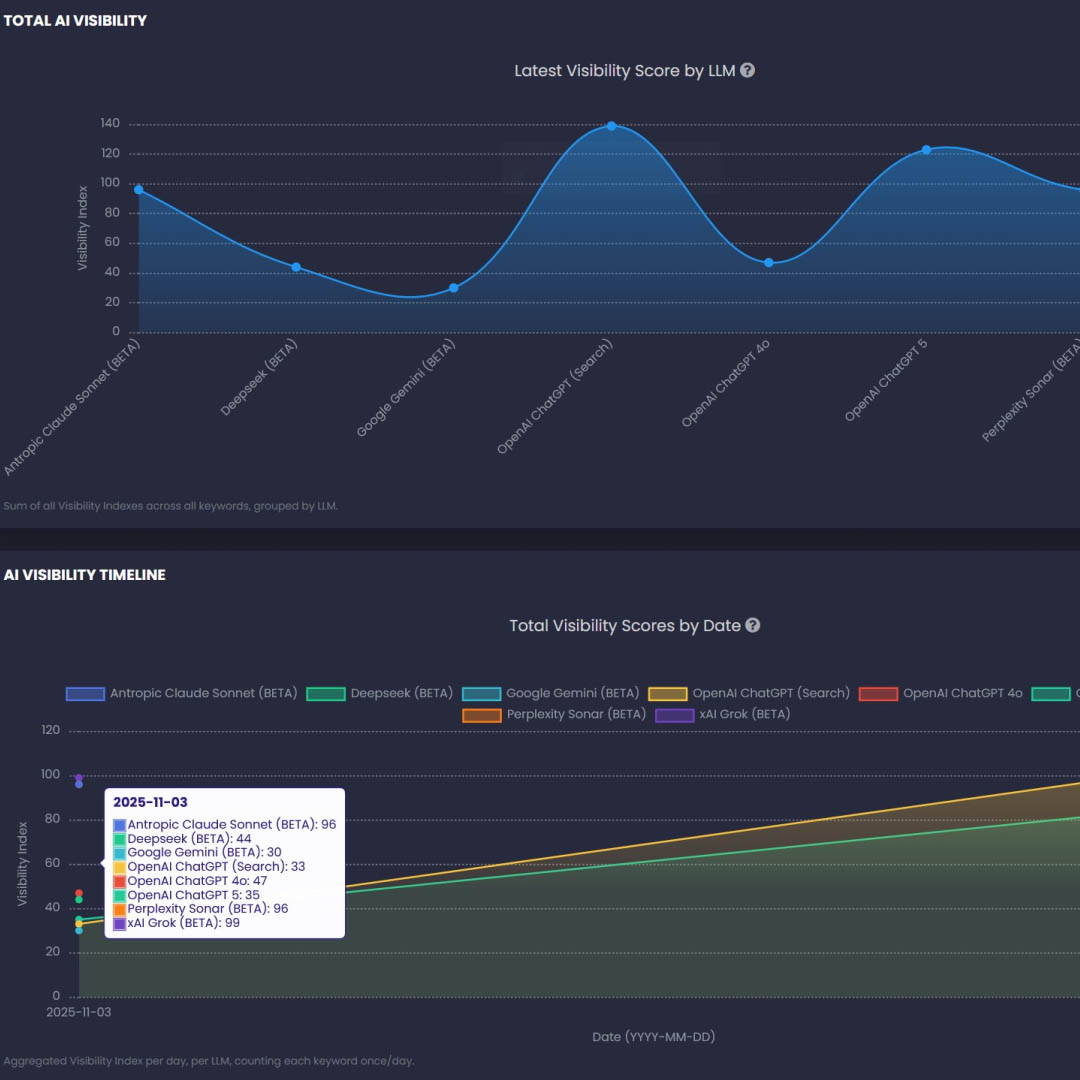
Compare visibility by engine, then review the timeline. A broad overview helps you ask better questions about each channel.


AI brand visibility & LLM rank tracking
See when your business gets recommended, where competitors appear instead, and which opportunities deserve your next marketing move.
Turn AI answers into a clearer picture of your brand visibility—across engines, locations and languages.
For businesses, in-house teams and agencies.
01 / Find the blind spots
Your next opportunity may be hiding between the two. RankLens makes that gap easier to see.
Inside an actual RankLens report
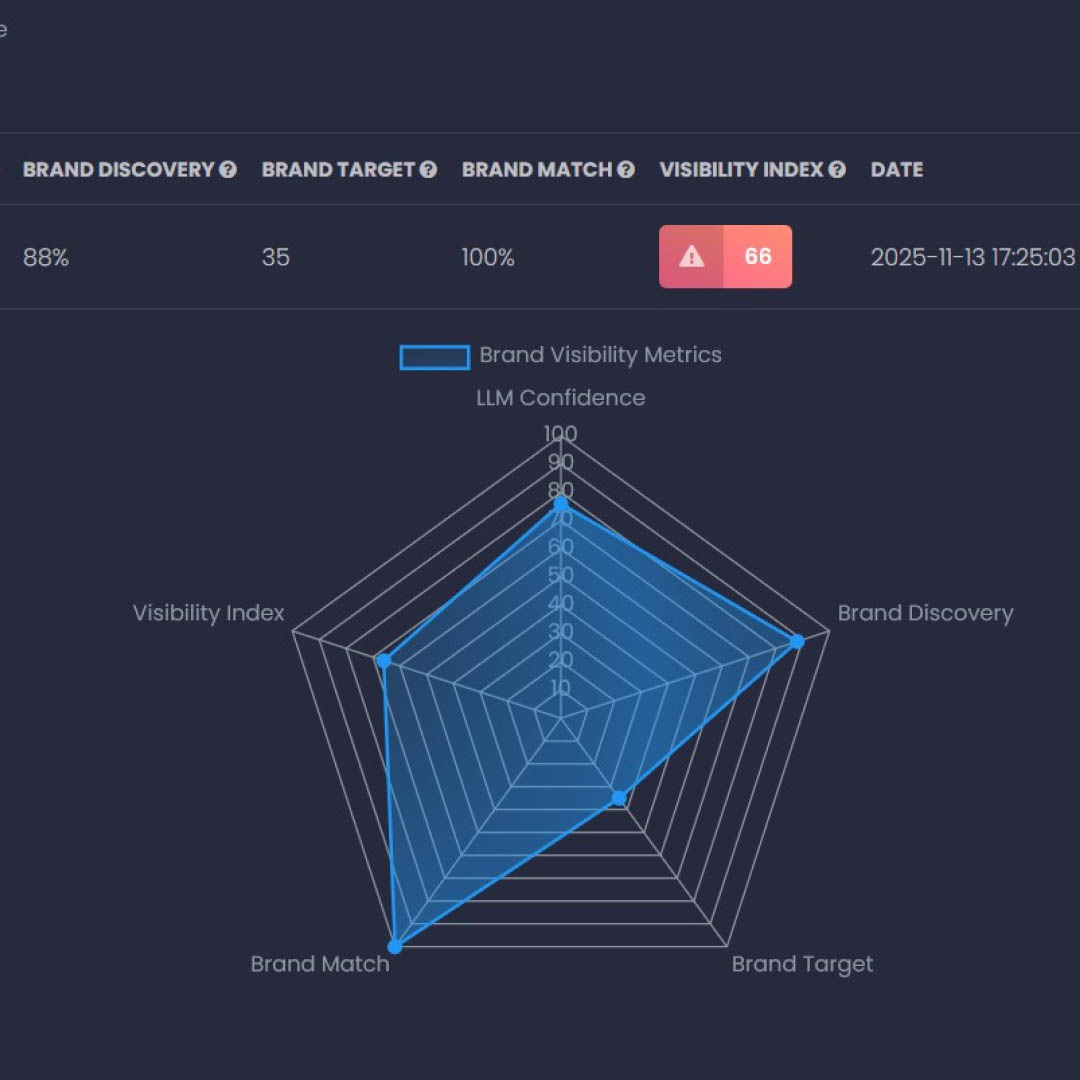
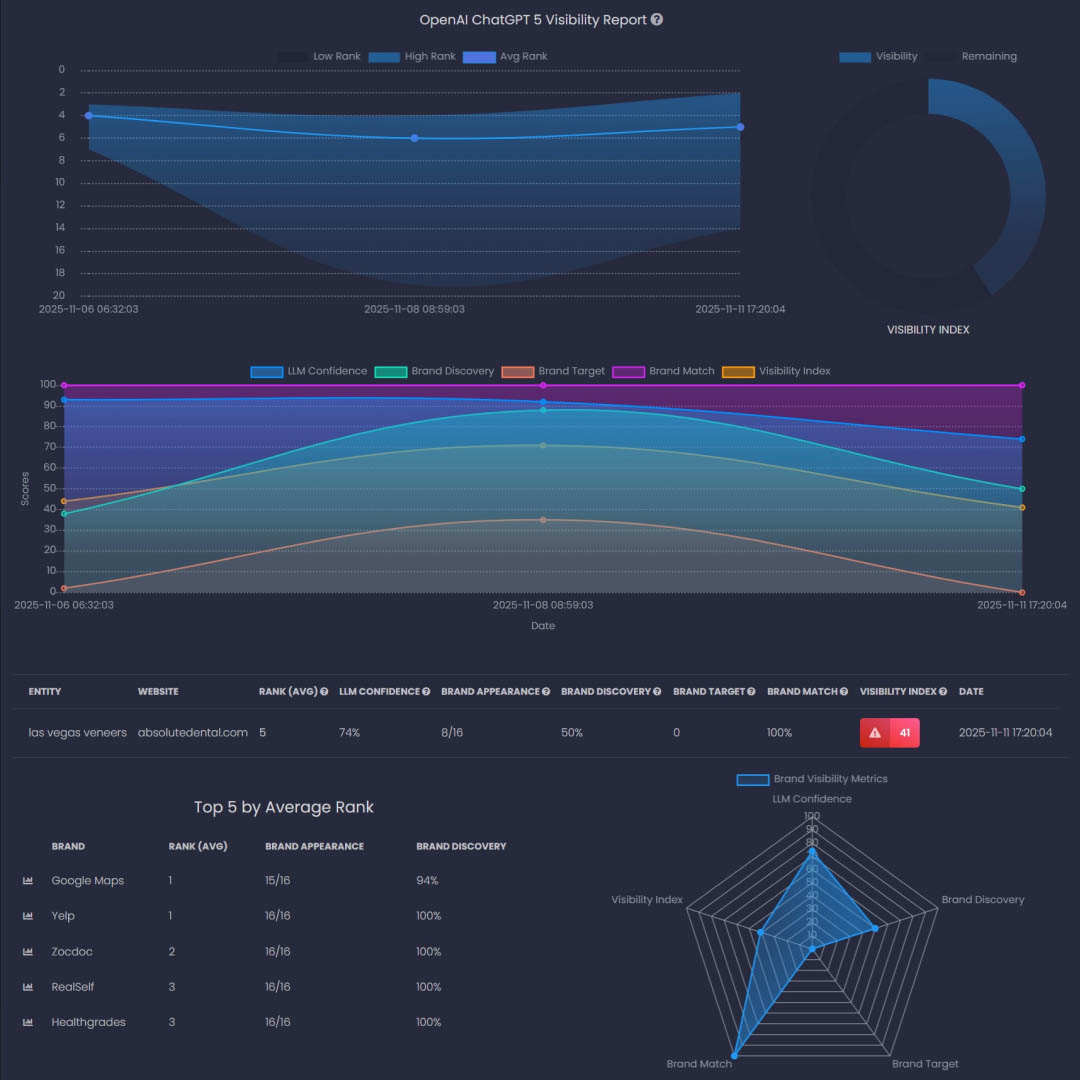
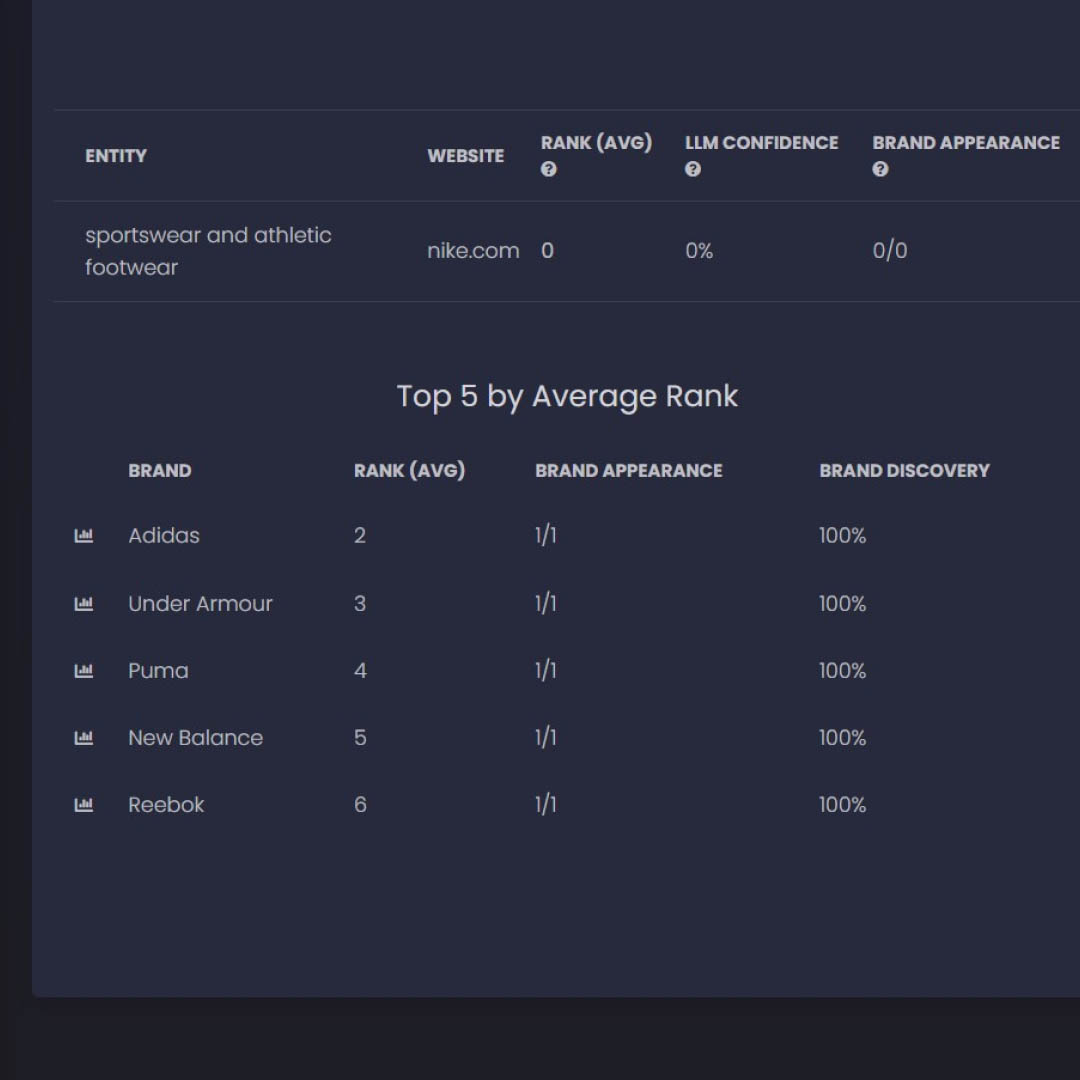
In this local-service example, the report shows a 100% Brand Match, but only 50% Brand Discovery. The brand appears in 8 of 16 samples.
The business question: What would help your brand appear more consistently for this buying intent? Use the gap to guide the next content, positioning or GEO discussion.
Selected report dated November 11, 2025. These are AI visibility metrics, not traffic or sales figures.
Put competitor visibility in context
A brand mention on its own tells only part of the story. Compare the businesses appearing around the same entity, their recommendation order and how often they are discovered.
Find the competitive gap. See which alternatives are surfacing for the topics that matter to your offer.
Choose the next move. Bring the evidence into your content, positioning and campaign planning.
Check what changed. Rerun a comparable report instead of relying on a one-time screenshot.
02 / Measure the whole picture
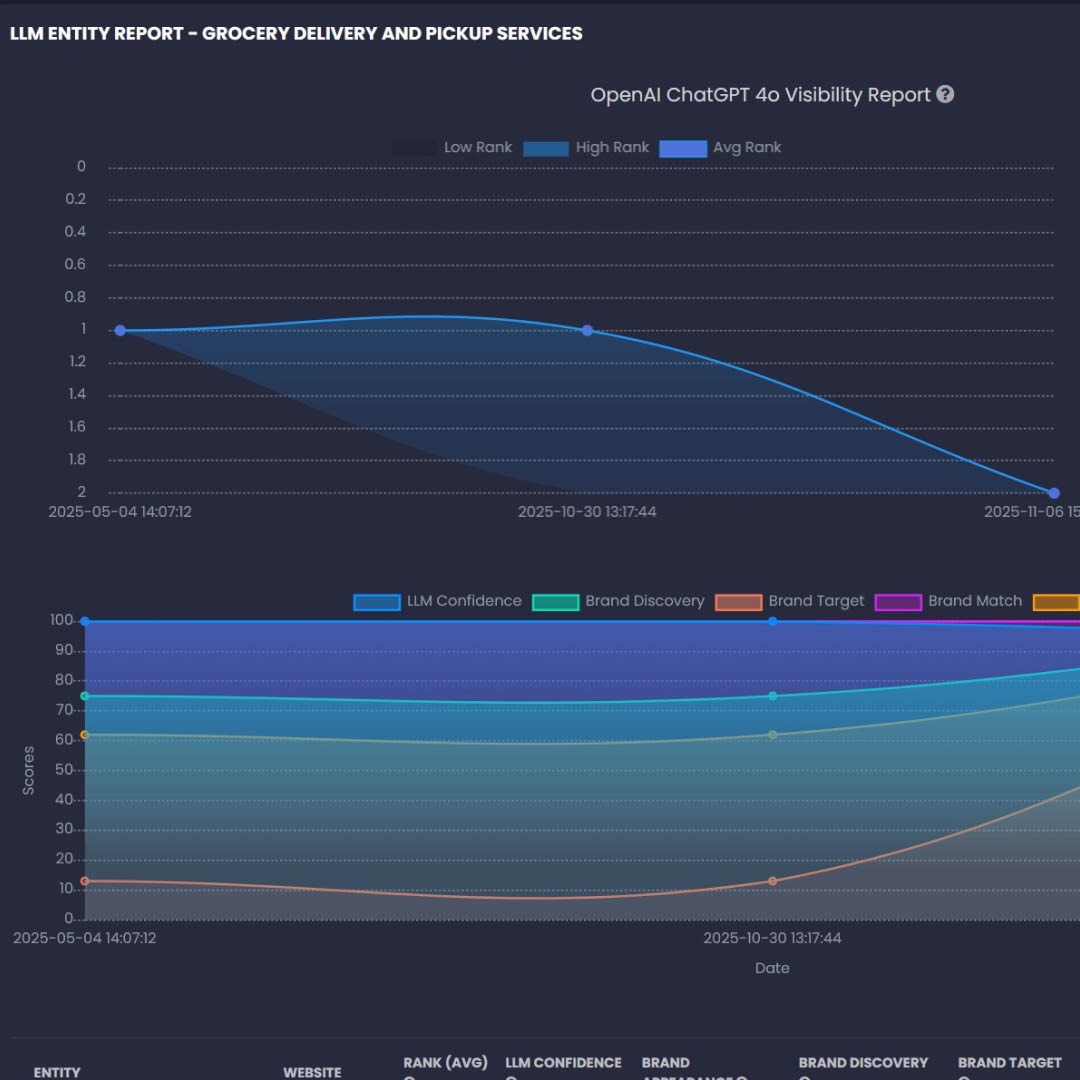
Compare engines, entities and reporting dates. See where your visibility is established, where it is thin, and where the next investigation should begin.
Across AI engines
Compare visibility by engine, then review the timeline. A broad overview helps you ask better questions about each channel.
Across entities & reports
Go from the overall trend to the entity-level scores. See where the brand is showing up—and where it still needs attention.
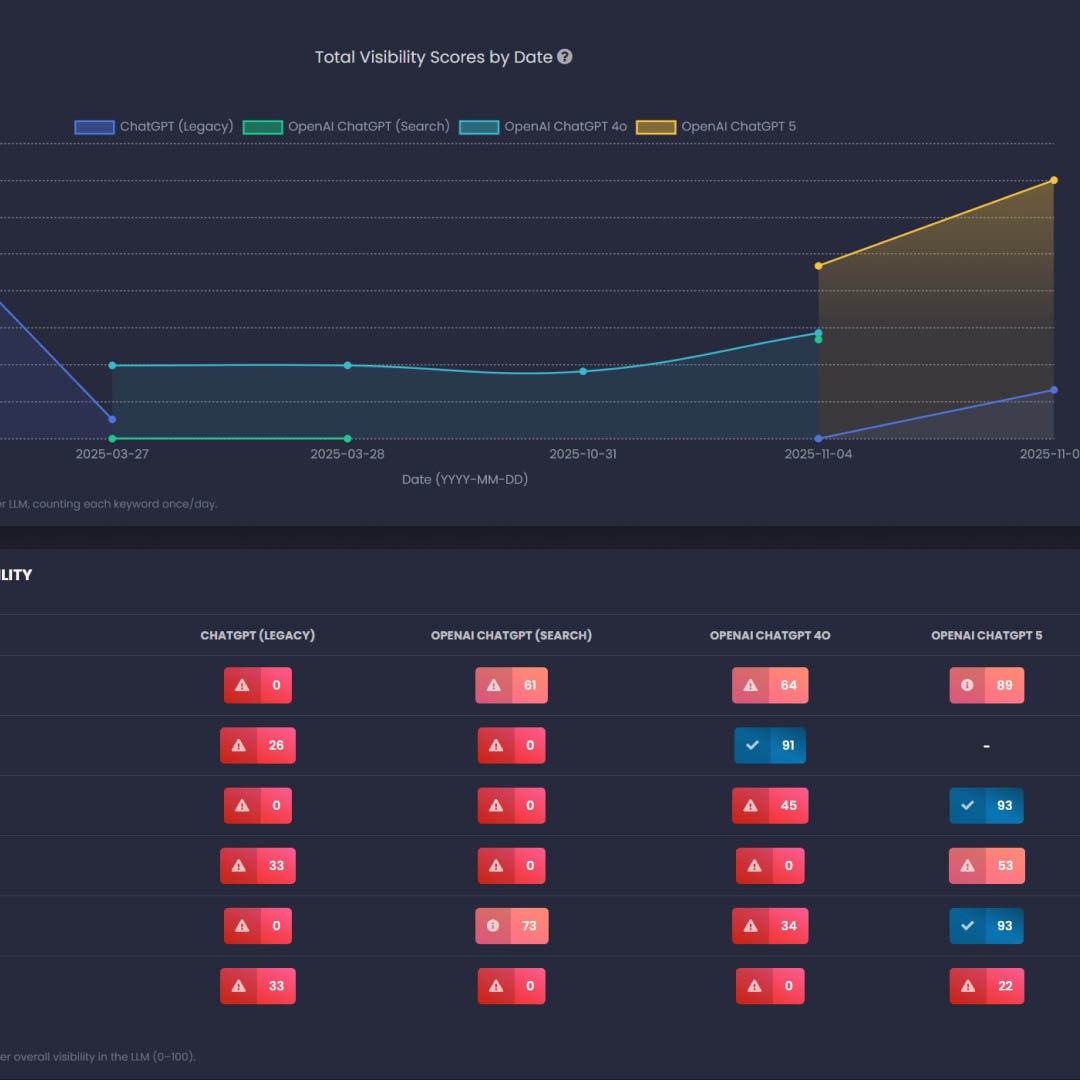
Screenshots show existing reporting examples. Select currently available engines in your account, and keep test settings consistent when comparing periods.
A score for the meeting. Detail for the next move.
The Visibility Index gives you a starting point. The underlying signals help explain what deserves a closer look.
03 / Make the test match your market
Start with the products, services and situations your customers care about. Then measure them in a way you can repeat.
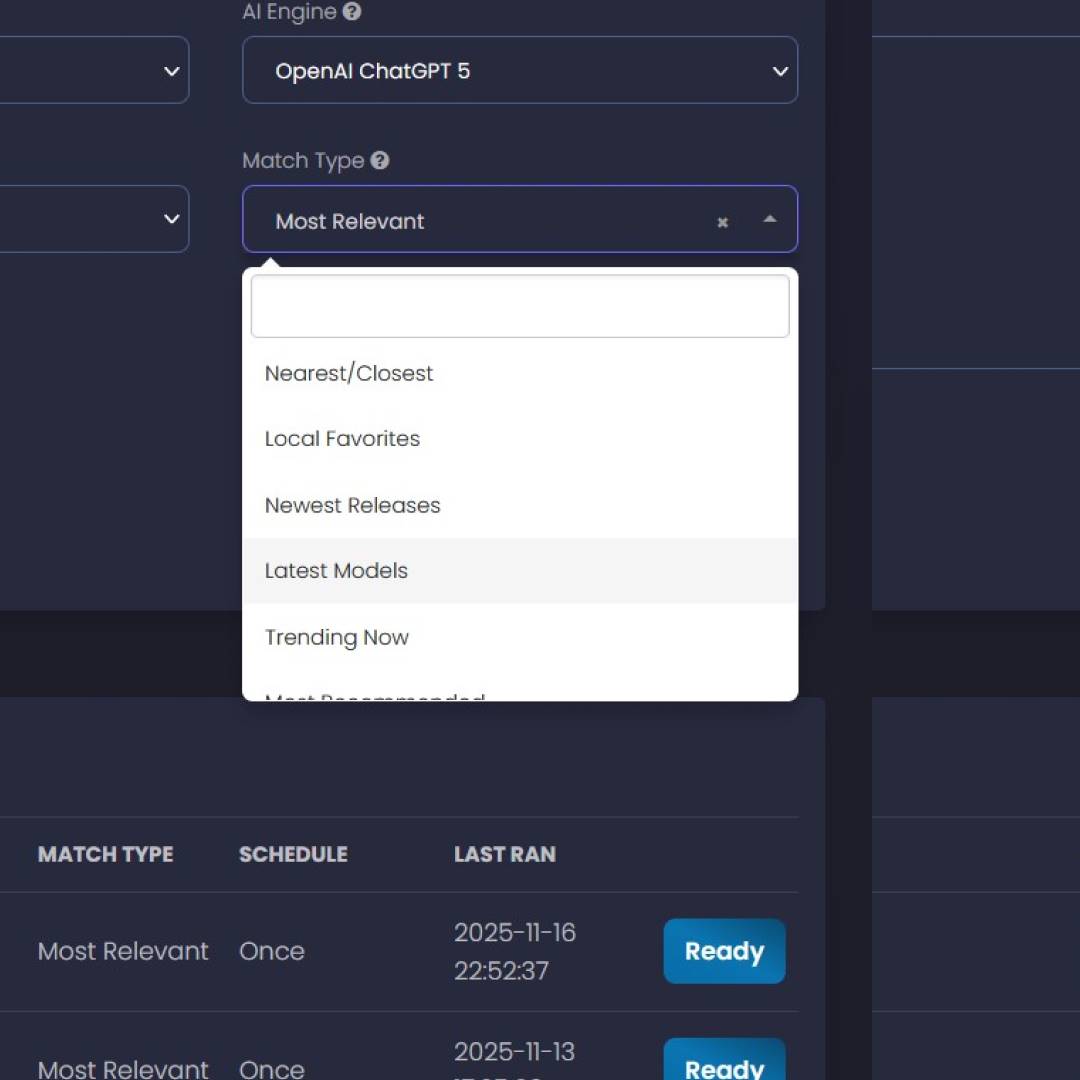
Use match types to explore how your offer appears in different contexts—from nearby options to local favorites and specialist needs.
Use 4×, 8× or 16× sampling options to review repeated answers and recommendation ranges, not just a single response.
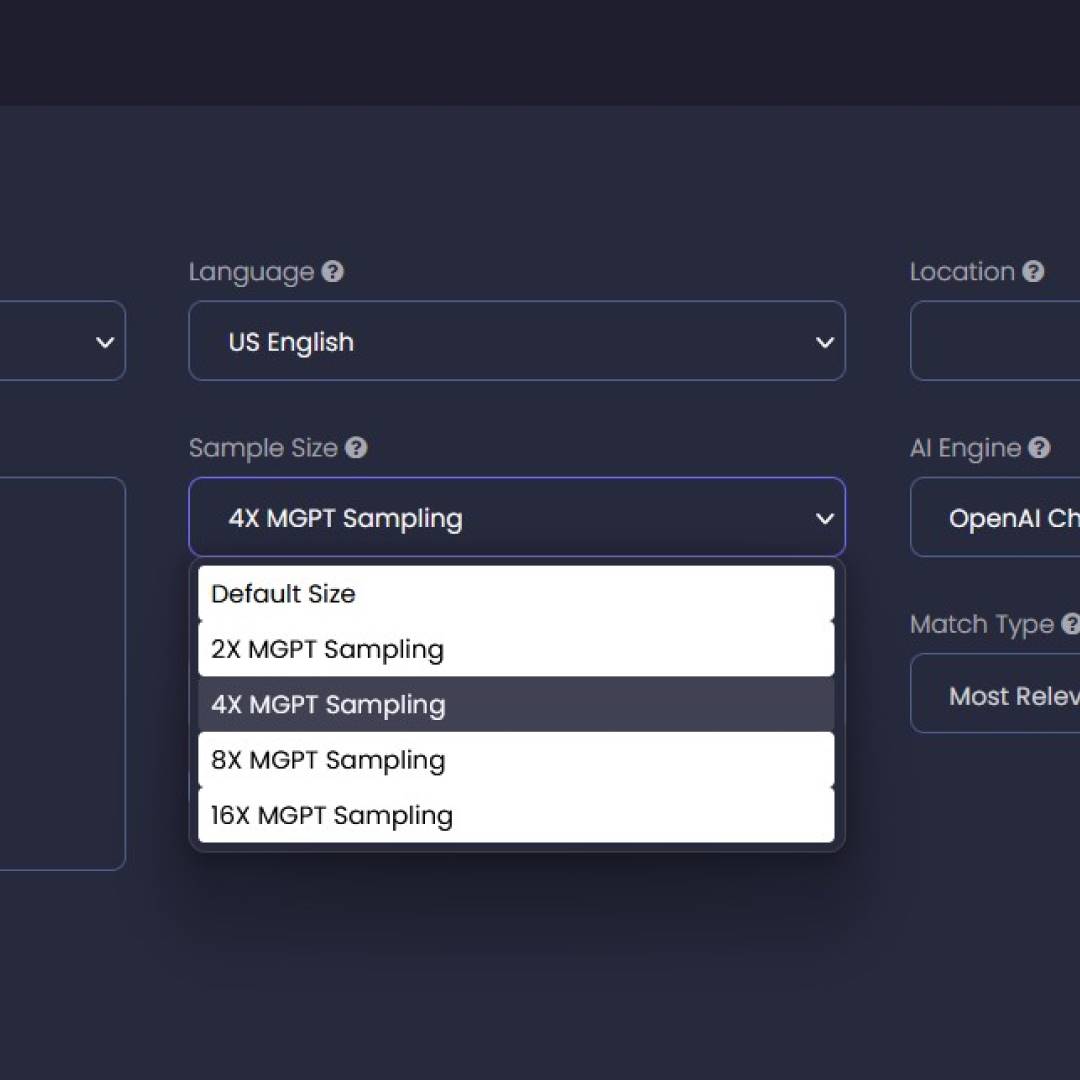
Choose language, location, AI engine and schedule. Keep the conditions comparable so your next report answers a useful question.

04 / Bring better evidence to the conversation
Show the starting point, what changed and where to focus next. Give clients and stakeholders a clearer view of the work behind your AI visibility strategy.
Recurring reporting
Schedule reports and review trends across dates. Use a consistent baseline to make campaign conversations more concrete.
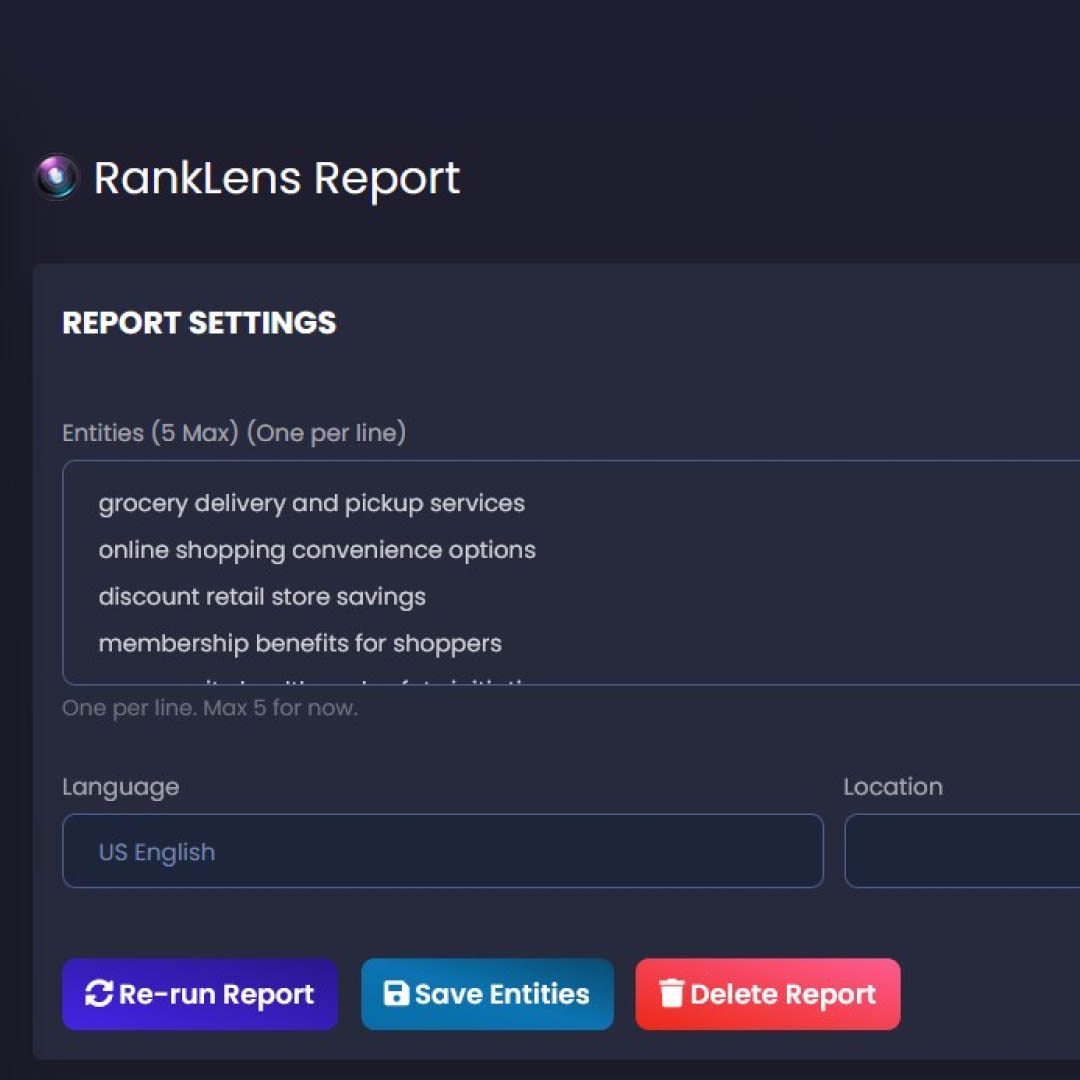
Reusable project setup
Save the entities that matter to a project and rerun the report. Spend less time rebuilding the setup for every review.
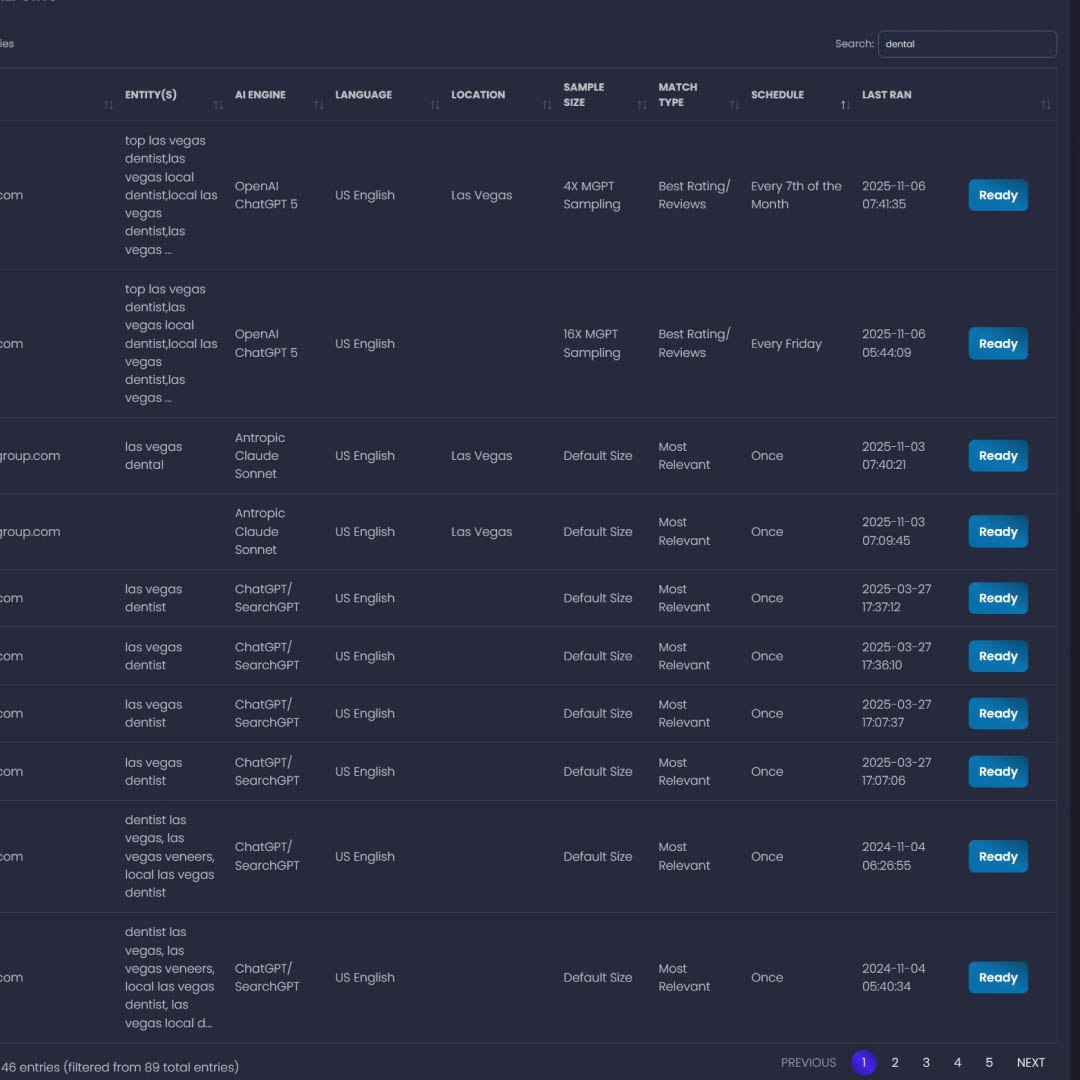
Organized visibility
Find reports by entity, engine, language and location. Bring the right market context to each client conversation.
Use CSV/PDF exports, project-level Collective reports and your white-label reporting workflow to support proposals, strategy reviews and ongoing client updates.
A few useful answers
AI visibility, LLM rankings and what to do with the data.
RankLens is SV’s AI brand visibility tracker. It measures how brands and websites appear in sampled AI recommendations, including recommendation order, brand discovery, competitor context and an overall Visibility Index. Use it to build a baseline and monitor your visibility over time.
A conventional SEO ranking is a position in a search-results page. An LLM ranking is the order in which a brand appears in an AI-generated recommendation. RankLens measures repeated samples of those answers; it does not treat one chatbot response as a permanent position.
Create a free SV account to access RankLens and start checking your AI brand visibility. You can also explore the public company reports before signing up. Available engines, sampling options and account limits are shown in the platform.
RankLens supports reporting across ChatGPT and search modes, Perplexity, Gemini, Anthropic Claude, Grok, DeepSeek, Llama and more. Choose from the engines available in your account. Report comparisons depend on the engines and data included in each run.
The Visibility Index brings several visibility signals into an overall score for the tested brand or entity. Use it as a summary, then examine recommendation rank, Brand Discovery, Brand Match, Brand Target and LLM Confidence to understand the detail. It is not a measure of sales or market share.
AI responses can vary even with similar prompts. Repeated sampling lets you inspect average, high and low recommendation positions instead of relying on a single response. For a useful comparison over time, keep the engine, entities, location, language and other test settings consistent.
Yes. Set the location and language to reflect the market you want to understand. You can organize separate reports for different service areas, languages and buying contexts rather than blending them into one broad result.
Yes. RankLens supports recurring reports, project-level Collective reporting and CSV/PDF exports. Use the reports in your client updates and white-label reporting workflow to show the starting point, competitor context and changes over time.
RankLens is a measurement tool, not an automatic ranking or lead-generation service. Use its findings to prioritize content, brand positioning and GEO work. Review traffic, inquiries and sales in your analytics and CRM alongside the visibility reports to judge business impact.
Your brand belongs in the conversation
Your next move starts with a clearer view of your AI visibility.
RankLens by SV · AI brand visibility & LLM rank tracking