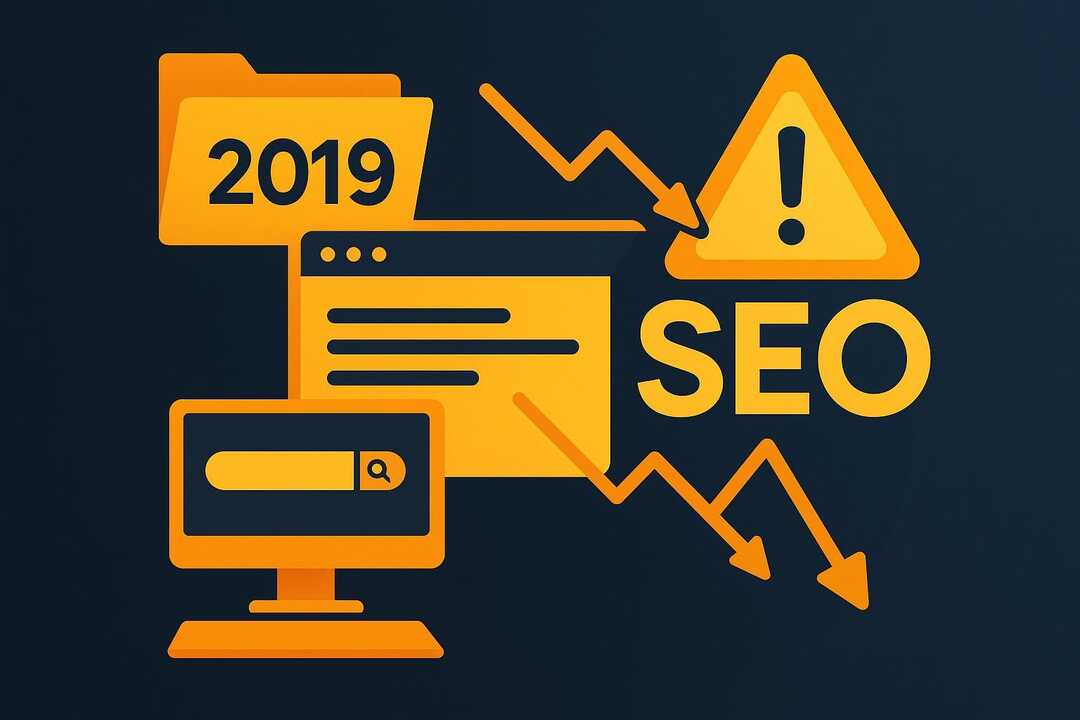
Old content frameworks from 2019 hurt SEO because they push stiff keyword layouts that miss intent, context, and use. Search systems have changed. Readers therefore want fast answers, clear structure, and plain words.
Table of Contents
Your pages built on old templates can hide facts, repeat words, and send bad signs across mobile, voice, and AI results. As a result, you need content models that fit your intent, your devices, and your quality rules.
That starts with you defining content frameworks.
What Are SEO Content Frameworks
SEO content frameworks are repeatable outlines that map search intent, sections, proof, and links. They guide what you cover and how you move through the page. Search Engine Journal says each framework is a snapshot of the proof out there then.
One older model had four groups, but by 2023 it had 39 emotions. That gap matters now. If you keep 2019 rules, there’s a real risk they hurt your SEO. This is because they were made for ten blue links, while AI Overviews now reach 2.5 billion users.
Compare vs Modern Content SEO Strategies
Now that you know the basic framework, this table compares four key gaps between 2019 models and modern content SEO.
| 2019 approach | Modern approach |
|---|---|
| Direct visit focus | Search and aggregator focus; Reuters Institute says only 22% start direct. |
| Keyword match | Meaning and entities; Bhan says Semantic SEO adds thematic depth. |
| Blue link goal | Answer visibility; Iliadis says engines now convey facts and “knowledge.” |
| Loose page data | Structured data; Berners-Lee et al. pushed machine readable meaning. |
How To Update Old Content Frameworks Checklist
Use these five steps to refresh old frameworks fast.
- Audit every live URL first. Put titles, meta, format, word count, and dates in one list.
- Check Google Search Console next. Review views, clicks, CTR, average rank, and sales.
- Scan for tech faults with Sitebulb. Fix broken links, copy pages, thin copy, and slow loads.
- Rewrite each page for clear intent. Give you direct answers, short proof blocks, and fresh details.
- Republish, then watch results each month. The guide says refreshed posts can double traffic and help you gain AI Overview visibility.
FAQs About Content Frameworks Hurting SEO
After that, there’s a quick FAQ for four common questions.
- Do old frameworks still rank? They can, but stiff keyword maps miss the full topic range Google sees after Hummingbird.
- Do you need exact keywords? No. The source says you can rank without using one phrase again and again if you cover the topic.
- Can broader pages lift traffic? Yes. The source reports a “massive increase in organic traffic” after you clean up content.
- Does long content always win? No. The source says weaker sites need deeper pages, while strong sites may rank on their own authority.
Drawbacks Of Rigid Templates From 2019
This section covers four limits, and there are real risks if you still use it as your fixed 2019 template.
- Keyword copying: The risk is sameness, because top 20 or 30 result templates make you mirror their terms.
- Update exposure: Google’s Helpful Content Update in 2022 and 2023 hit pages built for search first.
- Meaning gap: MUM in 2021 and Gemini in Search in 2024 read ideas more deeply than term counts.
- AI blind spot: A Reddit r/seogrowth thread said old systems lacked an “AI friendly” metric, and you missed citation cues.
Why Audiences Hate Overstuffed Keyword Layouts
People hate stuffed keyword layouts because they break trust, slow reading, and make your page feel aimed at search engines. As a result, there’s no flow. Repeated terms in headings break your focus fast.
It stops sounding human fast. In Google Search Console, you can see which plain spoken posts already show up in results without stuffing terms into every line. That tells you a lot. In many cases, a small tweak, like moving a new phrase into the title or H1, serves you first and can lift traffic.
How Voice Search Changes Content Structure Needs
Voice search needs answer-first structure. The source guide says 45% of U. S. Users now search by voice, so your page must match spoken questions. This means you need short headings, plain words, and direct replies where you expect them.
It must sound human. Google’s Search Generative Experience sums up pages, so buried answers lose ground while clear lead lines give you text for voice tools to quote. As a result, there’s less room for your warm up copy.
Give the answer, then detail.
Why Mobile First Design Demands Fluid Content Models
Mobile first design needs fluid content models because fixed blocks break on screens. That is why your 2019 content frameworks hurt your SEO. If your model locks text, images, and spacing in one set, your desktop pages get long and sparse.
The study calls that “content dispersion” and links it to more mental strain. It also found that over 55% of worldwide web traffic comes from mobile devices. Across 13 qualitative usability tests, these spread out pages, in turn, made content harder for you to grasp.
When your content can reflow by screen and intent, you keep density, cut scrolling, and help search engines read it.
When AI Content Penalties Kick In
AI penalties kick in with scaled abuse. Google’s Danny Sullivan said in 2023, and again by April 2026, Google judges content quality, not how you make it. The problem is that it lacks value. As a result, those same rigid 2019 frameworks fail when you mass make near copy pages.
There’s no AI detector. For example, Ahrefs found 86.5% of top ranking pages contain some AI content. Instead, SpamBrain reads patterns, and if you publish 1,000 raw AI pages, your traffic can fall 40% to 90%.
Old frameworks can drag rankings. They miss the core need and trust signs you need on your pages. In particular, many 2019 templates pushed short, thin intros with exact match repeats that had worked before search systems raised quality bars.
That model will cost visibility. Google guidance shows broad core updates reward pages that meet your need fast, then prove real use with clear proof. This means you will gain more from a new structure than extra paragraphs.
Still, refreshes have tradeoffs. For pages that convert for you we should first test how well they cover your need before a rebuild or keep the stronger version.