2 STAGES01
StarterFunnel
Build your traffic foundation.
A focused start when your conversion page is already in place.


SV MANAGED AI MARKETING FUNNELS
Connect search, paid ads, landing pages and follow-up. Choose the funnel that fills the gap between attention and action.
For your business. For your agency’s next client.
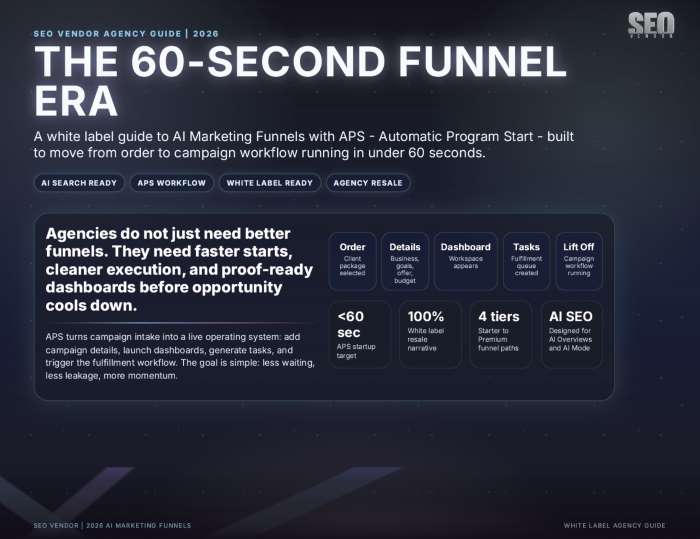
Four funnel paths. One practical guide.
Free PDF DownloadFOUR LEVELS. DIFFERENT JOBS.
Start with the job your funnel needs to do. Compare the visual profiles, then explore the scope behind each level.
Build your traffic foundation.
A focused start when your conversion page is already in place.
Give your offer its own destination.
More acquisition capacity, plus a purpose-built conversion page.
Keep the conversation going.
Traffic, two landing pages and email follow-up in one campaign.
Build around a more complex journey.
More reach and conversion assets, with segmentation-led planning.
Visual comparison indicators—not measured conversion rates, result forecasts or guarantees. Review the plan scope before choosing.
THE FUNNEL EXPLAINED
Choose a level to see its strategy, scope and starting requirements.
2-STAGE MODEL / USE YOUR EXISTING PAGE
Media budget is separate from the service fee.
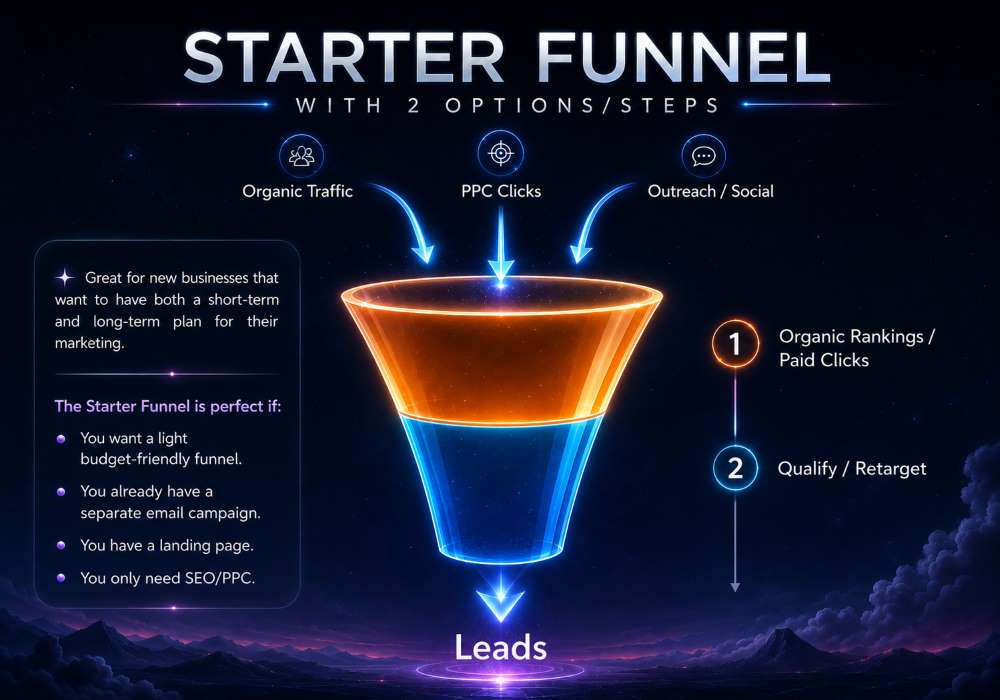
Starter connects organic search, paid advertising, social and outreach around an existing conversion destination. Its two-step model focuses on attracting visitors, then qualifying and retargeting interest. It is the leanest way to coordinate acquisition without commissioning a new landing page or email campaign.
You have a usable landing page and want a focused SEO/PPC campaign. Any existing email marketing can remain outside this package.
An acquisition foundation with keyword research, campaign tracking and reporting. The page and email infrastructure stay with you.
Supply the landing page and the necessary account access. Landing-page creation and email campaign setup are not included at this level.
A service business promotes an existing consultation page, then re-engages interested visitors.
3-STAGE MODEL / ADD A LANDING PAGE
Media budget is separate from the service fee.
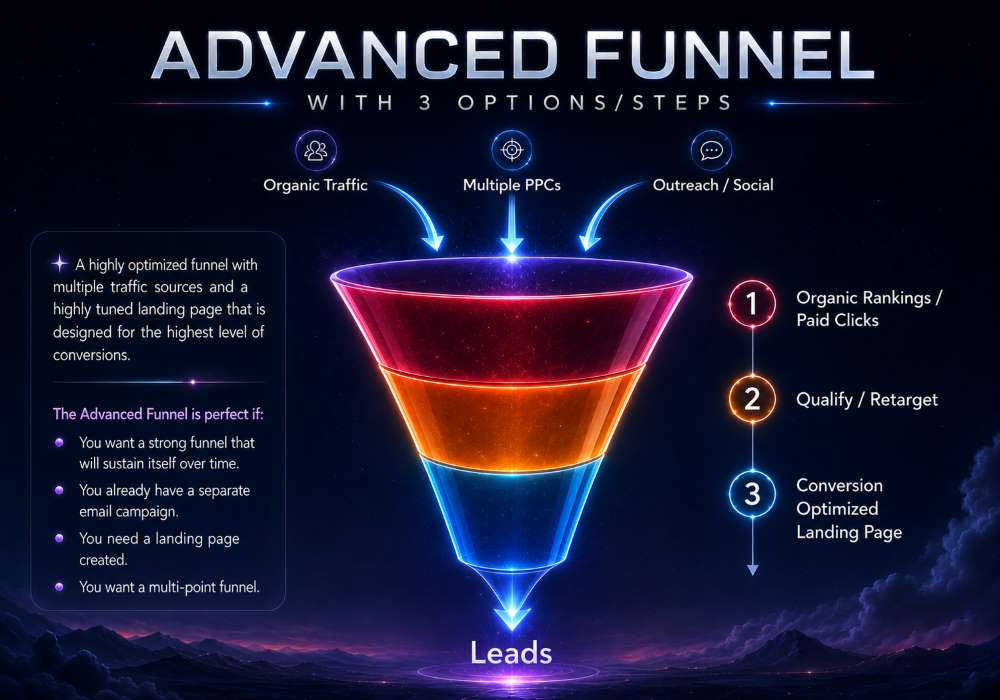
Advanced adds a conversion-focused landing page to the acquisition and retargeting foundation. The campaign has a dedicated place to explain the offer and guide the next action, rather than relying on a general website page. It also expands keyword coverage and paid-platform capacity.
You need a landing page created, want more than one advertising platform, or already manage email separately.
One landing page with 500 words of marketing copy, plus broader paid reach. This is the step from traffic generation to a more focused conversion experience.
Have an existing website or compatible page builder ready. Email campaign setup is not included; move to Pro when managed nurture is part of the brief.
A business introduces a service with a dedicated offer page instead of sending every ad to the homepage.
4-STAGE MODEL / ADD EMAIL NURTURE
Media budget is separate from the service fee.
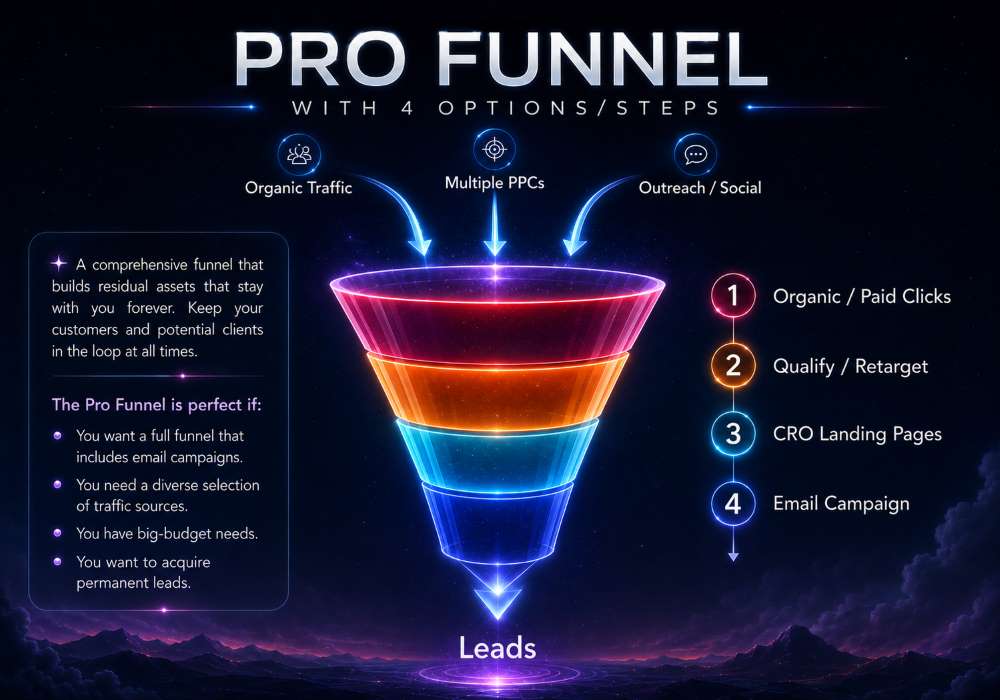
Pro adds email nurture to the traffic, retargeting and landing-page journey. It is designed for campaigns that need to stay in contact with prospects while they consider an offer. Two landing pages and greater acquisition capacity support a broader campaign without treating every visit as a one-time opportunity.
Your prospects need more information or follow-up before deciding, and you want email included in the funnel scope.
Two landing pages, full email campaign setup, four email designs, four emails and a Zapier connection. Email copy allows up to 250 words per included email.
An existing website or page builder and an email platform are required. Confirm the integration, audience and follow-up requirements before implementation.
A prospect requests information on a landing page, then receives a planned email follow-up sequence.
5-STAGE MODEL / EXPAND & SEGMENT
Media budget is separate from the service fee.
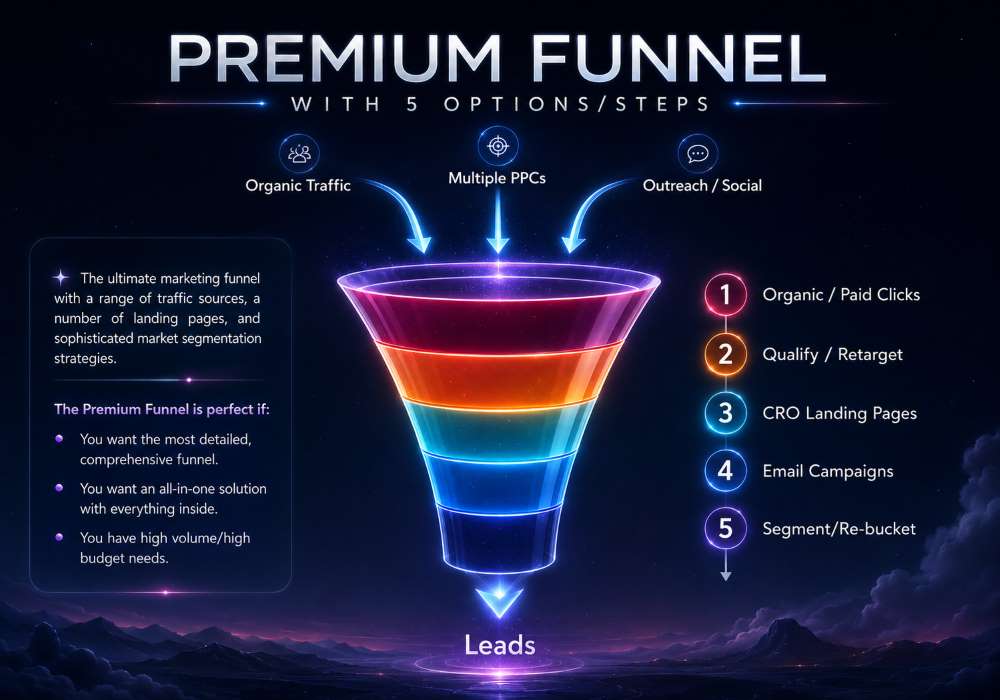
Premium brings the largest standard advertising capacity, three landing pages and email nurture. The funnel guide adds audience segmentation and re-bucketing to its five-step model: grouping prospects and adjusting follow-up as their interests or engagement change. Confirm the specific audience rules and automation scope during planning.
You need multiple traffic sources and landing pages, have a larger media budget, or need a more detailed audience journey.
A fourth ad platform, up to 100 ads and a third landing page. Pro and Premium include the same four email designs and four emails; Premium does not imply unlimited email production.
Prepare your website or builder, email platform, audience inputs and account access. Agree on segment definitions, follow-up rules and any integration requirements.
A multi-offer business uses different landing pages and plans follow-up around each audience’s interests.
The diagrams show the funnel strategy; the pricing page defines deliverables and limits. Setup items are not monthly rebuilds. See the complete plan comparison
FROM BRIEF TO BETTER DECISIONS
Define the offer, audience, budget and the action that matters most.
Connect the traffic, conversion and follow-up elements in your selected funnel.
Review the journey to find friction and understand where prospects stop.
Use campaign signals to prioritize improvements within the agreed scope.
APS creates the workspace, tasks and fulfillment workflow. Ads, pages and email still depend on access, approvals, tracking validation and quality checks.
24 questions
It is a coordinated campaign, not just a page builder or an automation tool. SV combines SEO, paid advertising, content, social activity and measurement, with landing-page and email work added by tier. AI supports campaign operations and analysis; the selected scope still requires setup, review and fulfillment.
Starter uses your existing landing page. Advanced adds one purpose-built landing page. Pro includes two pages and an email campaign. Premium expands to three pages and the largest standard advertising capacity; its guide also describes segmentation and re-bucketing. The funnel explanations above show what each step changes.
Starter is the natural starting point when your page is already in place and you mainly need coordinated acquisition. Advanced fits a brief that needs a landing page created but keeps email separate. Pro becomes relevant when email setup and follow-up should be included in the managed funnel. Existing tools should be reviewed before the scope is agreed.
No. Choose around your existing assets, media budget, number of offers and follow-up needs. A business with a clear offer and a working page may not need the additional assets of a higher tier. Premium is intended for a broader, more complex campaign—not a promise of better results in every situation.
No. A funnel combines several marketing disciplines. Dedicated AI SEO, national, advanced national, advanced local and enterprise campaigns have their own scope, content standards and optimization commitments. Linking those services here does not add their full deliverables to the funnel package.
They are the visual comparison indicators retained from the original funnel presentation. They are not measured conversion rates or predictions of how many visitors will become leads. A 100% bar is not a guarantee. Use the actual platforms, pages, email work and advertising limits to decide which plan matches your brief.
Yes. The published funnel plans combine SEO and paid acquisition alongside content, social and reporting. The listed SEO keyword counts are 10, 20, 30 and 40 for Starter, Advanced, Pro and Premium. The advertising budget is separate, and the platform and ad limits increase by tier.
Published options include Google, Facebook/Instagram and LinkedIn. Starter supports a maximum of one ad platform, Advanced two, Pro three and Premium four. The respective ad limits are 15, 25, 50 and 100. Agree on the platform mix for the audience and offer; the platform limit is not a requirement to use every available slot.
Advanced includes one landing page, Pro two and Premium three, with 500 words of marketing copy per included page. Starter uses the page or pages you provide. Included page work needs an existing website or page builder. These are scoped setup deliverables, not a promise to rebuild that number of pages every month.
Both include email campaign setup, four email designs and four emails of up to 250 words each, plus a Zapier connection and RSS distribution. Starter and Advanced do not include those email features. Pro and Premium require an email platform; Premium does not increase the stated four-design, four-email allowance.
Segmentation groups prospects by relevant characteristics or engagement. Re-bucketing moves them between groups as those signals change, so later messaging can match their situation more closely. The Premium guide includes this strategic layer. Confirm the segment definitions, available data, automation rules and implementation scope rather than assuming unlimited audience workflows.
The pricing page lists website and builder options including WordPress, Shopify, Squarespace, HubSpot, ClickFunnels, Leadpages and Unbounce. It also lists major email platforms, including ActiveCampaign, Mailchimp and Klaviyo. Confirm compatibility and access for your setup. An included Zapier connection is not an unlimited custom-integration or software-development commitment.
APS means Automatic Program Start. The under-60-second target is the operational start: campaign details are captured, the workspace is created, tasks are generated and the fulfillment queue begins. It does not mean every ad, landing page or email is published. Public launch timing still depends on access, approvals, client feedback and quality checks.
Have your business URL, offer, target audience, campaign goals, media budget and intended conversion action ready. Prepare the relevant account access, brand materials and an approval contact. Landing-page work needs a site or builder; email work needs an email platform. This is a planning checklist—the exact access and asset requirements should be confirmed for your campaign.
No. Media spend is separate. The published managed-spend limits are up to $3,000 for Starter, $5,000 for Advanced, $10,000 for Pro and $20,000 for Premium. Those amounts describe the advertising capacity of the plan, not ad credits, included media or a required minimum spend.
Use the marketing funnel pricing page for the current service rates and detailed comparison. Check the selected billing option in your SV account before ordering. Keep the service fee, media budget and any required third-party tools separate when planning the total campaign cost.
The pricing page displays two billing options with different rates for each funnel. Review the applicable order terms for the option you select, including renewal, changes and cancellation. Do not assume that the names alone establish a particular minimum term or cancellation policy.
Confirm any required third-party costs before work begins. Advanced, Pro and Premium need an existing site or page builder for included landing-page work, and Pro and Premium need an email platform. When planning your budget, do not assume software subscriptions or custom integration work are included unless your order explicitly says so.
All four published plans include the CORE AI Dashboard, Semrush analysis, conversion tag setup and monthly analysis and reporting. Which campaign signals are available depends on the connected accounts, configured tracking and selected scope. Agree on the conversion definitions before using the report to judge progress.
As a planning approach, assess each step: relevant traffic, landing-page actions, lead quality and follow-up. Define the conversion first—for example, a completed enquiry rather than a page view. Where the data is available, connect those signals to qualified opportunities and sales. A higher click count alone does not establish a better business outcome.
Separate workflow activation, public launch and campaign performance. APS addresses the first; asset readiness and approvals determine the second. Lead volume and timing also depend on the offer, audience, media budget, competition and sales process. There is no reliable universal timeline to infer from the funnel level or its progress bars.
No. APS describes operational startup, and the bars are visual comparisons. Neither is a performance forecast. Set campaign targets from the business context and available data, and review any contractual commitments separately. A lead still needs the appropriate response and sales process after it is captured.
Yes. The funnel offering supports white-label delivery. Your agency can retain the client relationship and present the offer under its own brand while SV supports the agreed fulfillment work. Confirm the client-facing reporting, communication and responsibilities during onboarding so the delivery matches your agency’s service promise.
Use the comparison to identify the extra capacity or assets you need, then ask SV to confirm the change in scope, billing and implementation. Existing pages, email setup and account access should be reviewed before moving. This page does not promise instant upgrades, automatic migration or additional work outside the selected order.
No matching questions. Try a different phrase or .
GIVE EVERY CLICK A NEXT STEP
Compare the scope, choose the right level, or bring your campaign brief to SV.