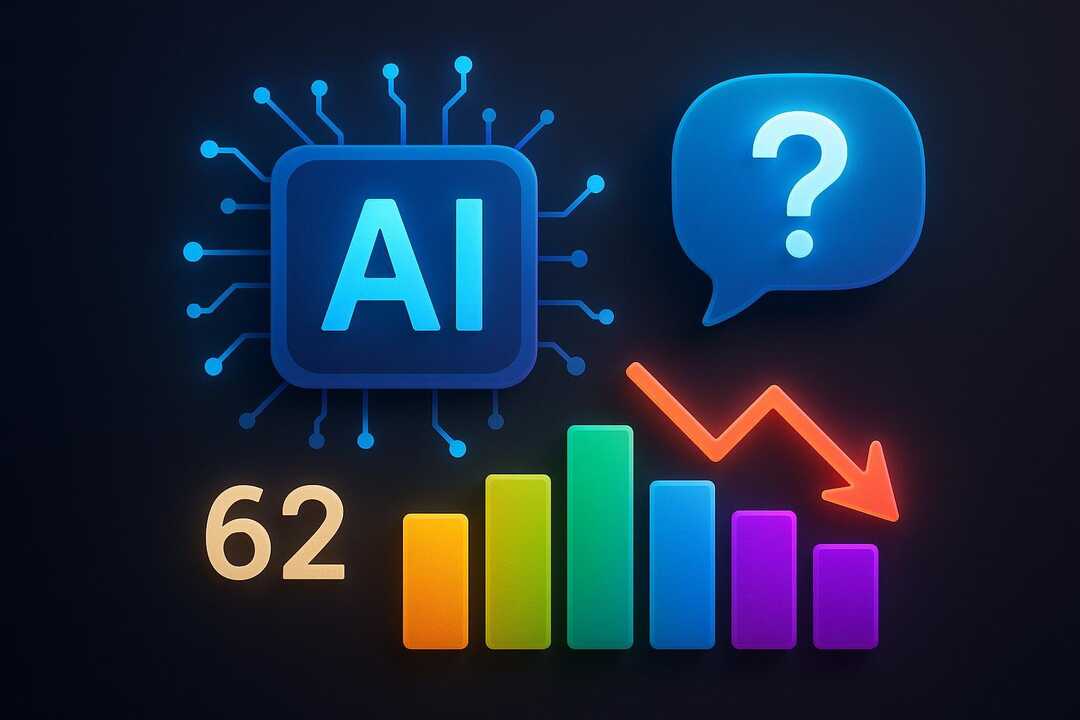
A 62% drop in recommendations means AI systems are mentioning your brand far less often. This decline can begin with a single follow-up question that narrows user intent and causes the model to prioritize immediate usefulness over brand recall. As a result, overall recommendation rates may appear stable even while one prompt reduces branded mentions by 62%.
Table of Contents
That is the point at which AI brand visibility can quickly disappear. Recovering it requires identifying the prompts that trigger the decline, testing corrective strategies, and avoiding overreliance on single-question metrics. First, we need to define exactly what the 62% drop represents.
Define AI Brand Recommendations Drop What Is It
AI brand recommendations drop means brands vanish after one more question. This means you can see your loss. Clovion ran 69,120 multi turn talks in 36 B2B software and fintech groups, then tested how they changed after one follow up.
According to Clovion, when you repeat the same question, it kept 90% of the list but when you add “for a small team,” it kept only 28%. In large enterprise tests, you saw 72% churn. Frederick Vallaeys says you predict meaning, so it’s easy to miss mistakes.
As a result, there was 62% brand churn.
What Causes Drop After One Question
After that baseline, these four questions show why AI brand recommendations can drop 62% after one question.
- Why does one follow up cut mentions? The first prompt is wide, so the model can suggest many brands. When you ask the next question, it adds limits, and weak fits drop out fast.
- Does demand narrow after the first ask? Yes. A Stack Exchange Meta trend showed questions fell from 286,300 in March 2017 to 9,883 in March 2026, or 29 times fewer, which shows how fast you can see public asking dry up once the easy question is gone.
- Are there fewer fresh prompts? Often, yes. In that Meta discussion, one commenter said communities may be “running out of new questions,” and you may see AI brand recommendations vanish more often when the second prompt feels like a repeat with tighter rules.
- Does user pullback reduce recall? It can. Another commenter said some users stay on “energy reserve mode” or feel a site “isn’t worth the time,” so you get less new language for models to learn from and repeat.
Steps To Recover Lost Brand Engagement Quickly
These five steps speed recovery.
- Check each AI answer and directory mention tied to your brand. Yext says standard analytics miss AI replies because they often show no click, no visit, and no clear referral trail.
- Fix NAP, hours, and facts. Yext says when your names, addresses, phones, and old hours don’t match, trust drops because engines see conflict instead of one clean record.
- Set one source of truth and add schema across key pages so engines can read your facts right. You get less trust without it.
- Expand listings to the sources answer engines use for their citations. Yext Listings syncs to 200+ publishers.
- Track citation accuracy, sentiment, and share of voice each week. Scout flags it fast.
Comparison vs Standard Recommendation Performance
That recovery work needs context. This table compares four key points with standard recommendation performance so you can see why a 62% drop hits fast.
| Key point | AI leaders | Standard recommendation performance |
|---|---|---|
| Overall score | 91.3 average | 87.8 down to 62.8 |
| Visibility | Found often | Barely seen |
| Answer quality | Clear, accurate answers | Thin or vague answers |
| Search reach | They cover many intents | They miss key intents |
| Chart position | Upper right | “Danger zone” lower left |
There’s a clear pattern in the benchmark data, where leaders average 91.3 and the gap runs from 87.8 to 62.8. It helps explain why AI brand recommendations vanish after one question. Their reach fades fast.
Mistakes Triggering Major Recommendation Drop
The earlier gap points to five mistakes that can deepen the 62% drop in brand recommendations after one question.
- Vague first prompts steer the model to generic picks over your brand.
- Thin context hides your fit.
- Leading questions box it in, so you get the most likely answer instead of weighing your brand on merit.
- Weak proof cuts trust fast.
- There’s less recovery when you lose your thread in follow ups.
Tradeoffs Between Accurate Questions And Brand Recall
Next, we answer four common questions.
- Why does accuracy cut brand recall? A tighter prompt is more exact, but you see fewer brands, and Profound linked ChatGPT mentions to choice across 221 tasks.
- Do sources shape recall? Yes; AI Overviews cite 2x more sources than Gemini, so they sway what you recall.
- Is one right answer enough? Often, it’s not enough for you.
- Where does recall fade fastest? There, Google may hide your site in their own cards for local queries.
Common Questions About The 62% Recommendation Drop
Here are four common questions and quick answers.
- Why does the drop matter? In the AIVO beauty study, brand owned sites made up just 2.4% of 3,814 citations across 610 domains, so your site alone will not show why AI brand recommendations vanish. If you lose the recommendation slot on one engine, you may never see your side.
- Can the answer be wrong? Yes. AIVO research found one engine kept saying that a beauty brand still had B Corp certification after the brand had publicly dropped it, which shows that a smooth answer can still be false.
- Where is AI pulling brand facts from? Mostly from outside your site. AIVO found the engines leaned on retailers, social platforms, and editorial outlets, which helps show why your brand recommendations can drift from your own messaging.
- How should you read the 62% recommendation drop? Read it per engine, not as one blended score. AIVO says no single visibility score captures representation well, so you need to track presence, recommendation, accuracy, sources, and sentiment with 95% confidence bands.
When Not To Rely On Single Question Metrics
Below, we answer four common questions.
- Does one prompt prove a real drop? No. It can flag a risk, but one prompt alone is too weak; Google AI Overviews and ChatGPT build the same type of answer in different ways.
- Can one question stand in for full visibility? There’s too much spread across systems. You will see sources in Perplexity, creator models lean on their training data, and specialist tools use platform signals, so they don’t rank brands alike.
- Should you treat fewer clicks as failure? No. Organic search volume is forecast to fall 25% by 2026, while AI summary traffic often shows higher intent, so Share of Model is a better check than raw visits.
- What signals matter more than one answer? The wider proof set matters more. Third party mentions are about 3x more tied to AI visibility than backlinks, and one industry analysis says, “In the AI era, your customer service record is in effect a ranking factor.”
Measures Brands Can Take To Preempt Drop
Brands can stop a 62% drop after one question by checking AI answers early. Then trace where it failed. You should also test brand, product, and category prompts across many LLMs and platforms over time because one brand name check misses mix-ups.
Your site is one input. However, third party pages on G2 or Reddit or in TechRadar can beat your site because their repeated claims stick in AI. The more sources agree, the more AI treats what they say as fact.
As a result, then build backlinks and press coverage.
Our test shows AI brand recommendations drop 62% after one question. However, single prompt wins fade. You will earn more mentions when your content answers likely follow ups. Query type still matters.
Our review suggests AI systems trim weak options once users add context because vague claims fail under a second prompt. This means you should rate pages by answer depth because broad copy may earn visibility while precise copy keeps final brand picks.
Results will vary by query. If your pages miss follow up intent, then revise them before you scale.