
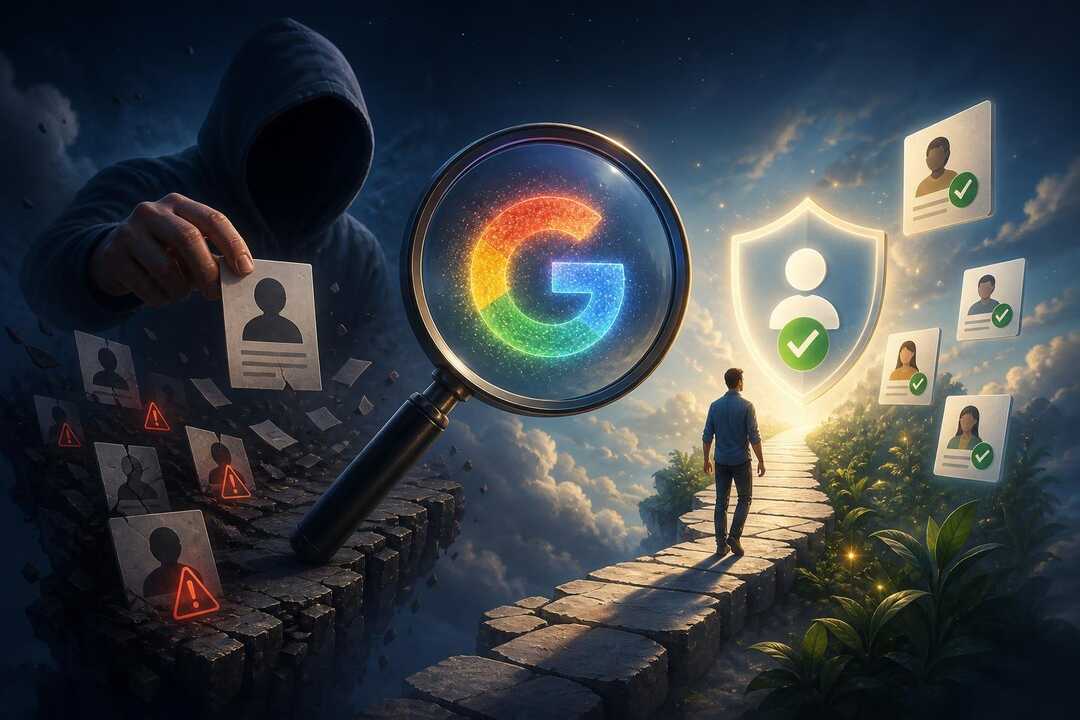
Recent changes to Google’s guidance have sparked claims about fake authors and SEO. The safer reading is narrower. A Google fake author warning points to deceptive authorship and weaker trust signals, not clear proof of a new author-specific ranking factor.
Table of Contents
That distinction matters because polished bios can distract from accountable publishing. The scope here is practical. It centers on where the warning sits, how false bylines affect credibility, and which author practices look legitimate, weak, or risky.
What Did Google Actually Change About “Fake Authors”?
The practical takeaway is simple: this kind of change points to clearer guidance, not a new SEO magic trick. In plain terms, fake authors should be read as a warning about deceptive presentation, not as proof of a new author-authenticity ranking factor.
That distinction matters early in the article. It frames the issue as trust and accuracy first. It does not, by itself, prove that Google now verifies every byline or applies a separate author penalty.
What changed, then, is best understood as sharper language around misrepresenting who created content. For publishers, the implication is direct. Real names, truthful bios, and consistent accountability matter more than polished author-page theater.
That keeps the focus on credible publishing practices instead of inflated claims about secret detection systems.
Where the Warning Appears in Helpful Content Guidance
Placement matters here. This warning is framed within Helpful Content guidance, not apart from it. That context points readers toward publishing quality, clarity, and accountability. It does not, on its own, signal a new standalone SEO system.
In practice, that means the issue sits beside broader guidance about making content for people first. It should be read as part of how a site presents who created the work. That is a trust question more than a byline-decoration question.
It also helps set limits on overreach. A mention in guidance can sharpen expectations without proving a separate ranking factor, identity check, or automatic penalty. For decision-making, the safer read is to treat author claims as one visible part of credible publishing, not as an isolated loophole to game.
Why Invented Author Profiles Can Undercut Trust Signals
Seen in that context, invented author profiles weaken trust because they create a mismatch between appearance and accountability. A polished bio can make content look credible while hiding who actually wrote it.
That matters because author information helps readers judge expertise, responsibility, and potential conflicts. When those signals are fabricated, the page stops clarifying credibility and starts simulating it.
Even if the article itself is useful, the surrounding presentation can still look deceptive. That is the real SEO risk. Not a proven author-only penalty, but a broader loss of trust signals around the page.
It also creates a maintenance problem. Once bios, credentials, or publishing histories do not line up across a site, inconsistency becomes easier to spot. For publishers, that makes truthful attribution a stronger long-term choice than manufactured authority.
Does Google Detect Fake Authors Algorithmically or Through Policy Enforcement?
Instead, the safer reading is narrower. A google fake author warning does not, on its own, prove a dedicated system that verifies every byline against a real-world identity. It is more useful to treat the issue as broader policy and quality enforcement around deceptive presentation.
In practice, fabricated author details could be noticed in several ways: inconsistent bios, unsupported credentials, conflicting site records, or other trust gaps around the page. That means the SEO risk is not limited to one algorithmic detector, and it is not reduced to manual review alone.
The stronger conclusion is simpler. False attribution creates signals that may look misleading at the page level, so publishers should focus on verifiable authorship rather than guessing which enforcement path matters most.
What This Means for E-E-A-T Without Turning It Into a Ranking Myth
Applied carefully, E-E-A-T should shape judgment here, not mythology. False bylines matter because they distort the signals readers use to assess experience, expertise, accountability, and trust. That makes authorship part of credibility.
It does not automatically make it a separate ranking lever. The practical mistake is turning a google fake author warning into a checklist obsession about bios alone. A polished author page cannot rescue thin reporting, vague sourcing, or unclear responsibility.
On the other hand, accurate attribution can support the larger picture a page presents. That is a credibility aid, not proof of a hidden score. A sound reading is narrower and more useful: treat authorship as one trust-bearing element within overall content quality, then evaluate it with the same discipline used for the rest of the page.
Which Author Page Practices Are Legitimate, Weak, or Risky
Practically, the dividing line is honesty, not polish. Legitimate author pages identify a real contributor, describe relevant expertise in plain terms, and stay consistent with the work actually published on the site.
Weak pages usually are not deceptive, but they add little. Think generic bios, no clear subject relevance, no publication history, or no visible way to connect the author to the content. Risky pages go further by implying credentials, experience, or identity that readers cannot reasonably verify from the site’s own presentation.
That includes mismatched bylines, inflated titles, stock-photo personas, or bios copied across unrelated topics. In a google fake author warning context, the safest standard is simple: use author pages to clarify accountability, not to manufacture authority.
How to Audit Your Site for Author Credibility Gaps
Start with a simple inventory of every byline, bio, and author page. Check whether each named person appears consistently across articles, profile text, and site navigation. Then test subject fit. An author covering tax, health, and roofing with one generic bio creates an obvious credibility gap.
Dates matter too. Old job titles, broken profile links, and empty archive pages weaken accountability fast. Review each bio for claims the site itself helps readers understand, not just impressive labels.
If a credential, role, or experience statement appears, make sure related work on the site supports it. Also flag stock-style headshots, duplicate bios, and ghost authors with no publication trail. In a google fake author warning context, the strongest audit result is simpler, clearer ownership of content.
Google’s warning appears to be a credibility signal, not proof of a new author-ranking system. The supported reading is narrower: deceptive bylines and invented bios can weaken trust around a page. That matters because authorship helps clarify expertise, responsibility, and consistency for readers.
It does not prove Google verifies every identity or applies a separate author penalty. The practical response is simple. Use real names, accurate bios, and clear accountability across the site. Honest attribution supports stronger publishing practices without turning authorship into an SEO myth.