
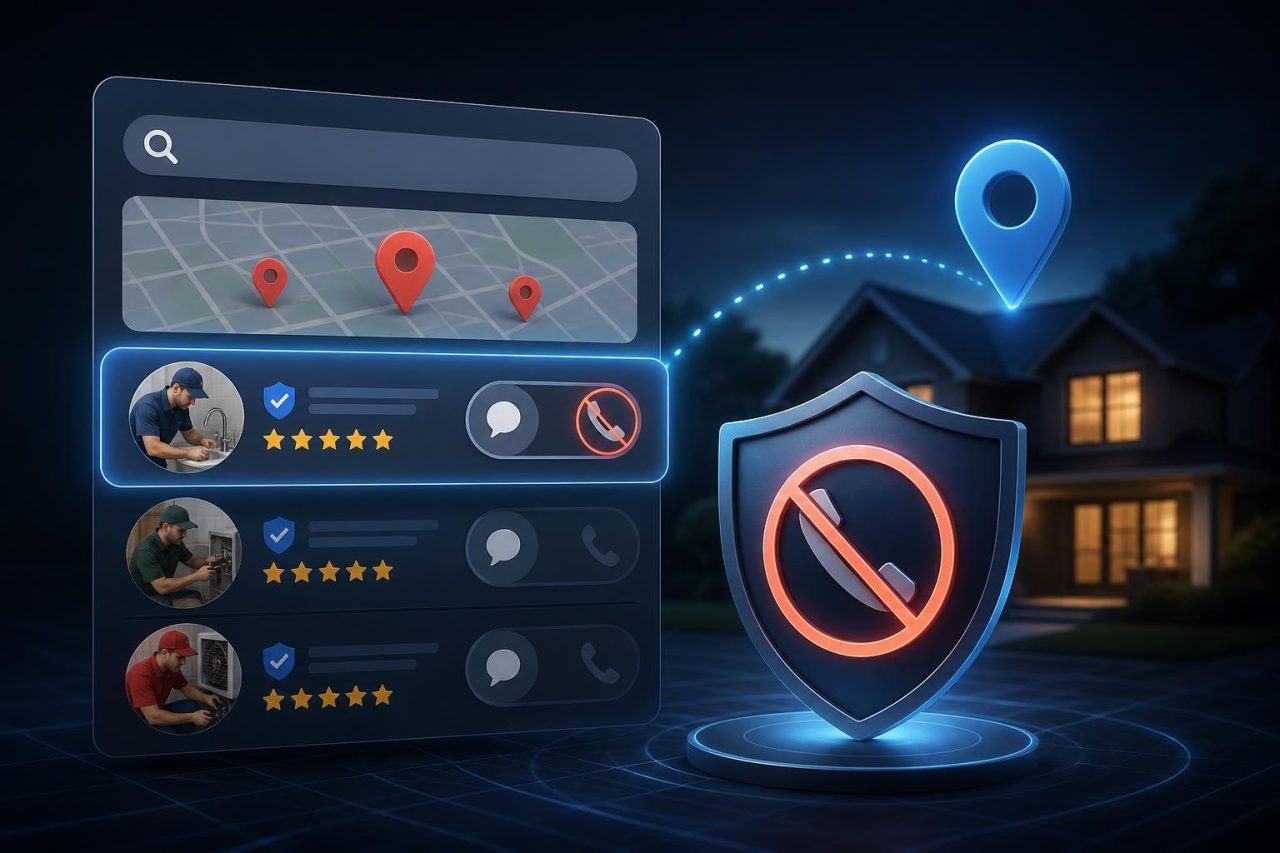
Google Local Service Ads appear to be moving away from an upfront, call-first layout. That does not automatically mean phone contact disappeared. The key issue is default visibility. When a phone number stays hidden at first glance, the contact path changes, even if calling remains available later.
Table of Contents
That distinction matters because fewer visible numbers can affect lead behavior, tracking, and interpretation. The central question is not only what changed. It is also where the change appears and how consistently it applies.
What Changed in Local Service Ads and Where Phone Numbers Still Appear
At a high level, the change concerns default display, not whether calls remain possible. When a platform hides a phone number by default, visibility changes first. The number is no longer shown upfront, even if a call path remains behind another click, tap, or profile view.
This can make the ad feel less call-first without removing phone-based contact entirely. The practical question is not simply whether a number exists. It is where the number still appears across the ad experience and how obvious that placement is to a potential customer.
An immediately visible number and one revealed later create different user paths. Those details shape how the ad invites contact. For the rest of the article, keep that distinction in view.
Why Google May Be Hiding LSA Phone Numbers by Default
Several platform incentives can explain this default display change without assuming a single motive.
- First, hiding a visible number can steer users through the ad unit. That keeps the contact path inside Google's interface longer, which can make actions easier to structure.
- Second, a delayed reveal can filter intent. Someone who taps deeper before calling may be more engaged than someone reacting to a number shown upfront, though that does not guarantee better leads.
- Third, the change may reflect a broader shift from call-first design toward mixed contact behavior. When discovery, messaging, profile views, and calls compete more evenly, default visibility becomes a product decision. It is not just a phone-number decision.
- The practical takeaway is simple: treat the move as a pathing change first, then test what it changes in actual lead behavior.
Does This Apply to Every Advertiser or Only Certain LSA Setups?
Whether this affects every advertiser depends on setup scope, not just the headline change. The safest reading is that default phone-number visibility may vary by placement, account state, category, or contact path inside the Local Services Ads experience.
- One useful lens is ad placement. A hidden number on one screen does not prove the same treatment across every entry point, profile view, or device context.
- Another lens is advertiser configuration. If call, message, and profile actions are presented differently, the default display of a number can change without meaning the entire program changed uniformly.
- A third lens is observation discipline. Treat broad screenshots or isolated examples as signals, then verify whether the same pattern appears across comparable accounts before calling it universal.
How Hidden Numbers Could Change Lead Volume, Call Quality, and Tracking
Hidden numbers can change performance even when total demand stays roughly the same. The first effect may be lead volume. Some prospects will not take the extra step to reveal or tap a call path. That can reduce quick, impulse-driven calls at the top of the funnel.
The second effect may be call quality. People who continue through a longer contact path may show stronger intent, but fewer calls do not automatically mean weaker results. Tracking can also get messier.
When users move between profile views, messages, and calls, the path behind a lead becomes harder to read from call counts alone. In practice, a visible drop in calls may reflect path friction, channel mix, or reporting gaps, not just less interest.
What Evidence Marketers Should Check Before Assuming Performance Dropped
Marketers should check several signals before treating fewer visible calls as proof of weaker performance.
- Start with total lead volume across every tracked contact path. A call dip matters less when messages or booked actions rise.
- Compare the same service area, budget, and schedule before judging the change. Mix shifts can look like demand loss when delivery conditions also move.
- Review each step between a profile view and completed contact. Extra taps may reduce calls while leaving high-intent leads intact.
- Check closed-loop outcomes in a CRM or booking system, not platform activity alone. Fewer calls can still be acceptable if qualified jobs, sales, or show rates hold.
- Wait for enough data to smooth daily noise. Small accounts can show sharp percentage swings from only a few missing calls.
Are Message Leads and Profile Interactions Replacing Direct Calls?
Calls are not necessarily being replaced; the mix may simply be spreading across more contact actions.
- Message shift: Some prospects may choose a message when the path to calling is less immediate. That changes lead mix first, not demand by itself.
- Profile actions: More profile views or taps can signal added consideration before contact. They matter only if they lead to real conversations, bookings, or jobs.
- Replacement test: A true replacement pattern appears when calls fall while other qualified lead types rise enough to offset that loss. If total qualified outcomes also drop, calls are not just moving elsewhere.
- Decision point: Treat messages and profile interactions as possible substitutes, not automatic equivalents. The useful question is which path produces the same or better downstream value.
The Measurement Limits: Attribution Gaps, Call Reporting, and Offline Conversions
Tracking gets murkier when contact paths split across calls, messages, and profile actions. The core limit is not visibility alone; it is knowing which touchpoint produced a real job.
- Attribution gaps appear when one customer views a profile, sends a message, then later calls. Each step can look meaningful. Yet the sequence may describe one lead, not three separate outcomes.
- Call reporting can understate or overstate performance when it captures contact attempts better than qualified conversations. A lower call count may reflect reporting boundaries. A steady count can still hide weaker lead quality.
- Offline conversions are hardest because revenue usually happens after the platform interaction ends. That makes booked jobs, sales, and close rates the deciding checks when call volume no longer tells the full story.
Instead, the clearest answer is qualified: Google Local Service Ads can hide phone numbers by default, but that does not mean calling has disappeared everywhere. The main change is the path to contact.
A visible number may be replaced by an extra tap, a profile view, or another contact step. That added friction can lower fast calls, shift some leads toward messages, and make performance harder to read from call counts alone.
The practical test is simple: judge outcomes across all lead paths. Then compare qualified jobs, bookings, or sales before assuming demand fell.