
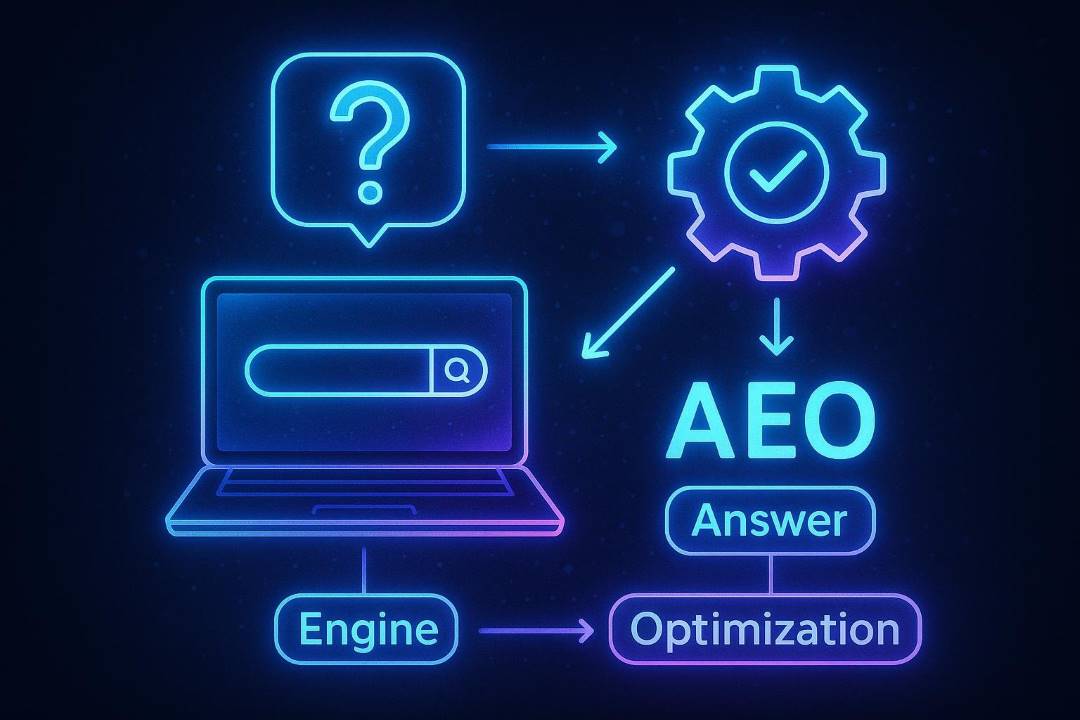
AI answers guide your clicks. Answer Engine Optimization helps you win instant answer spots. It aims at chat style asks, so you get clear replies now instead of ten blue links. In addition, structured data makes meaning easy too.
Table of Contents
Trusted sources and real facts build trust, so AI can rank your answer above old SEO pages, often first. However, AI also shifts traffic. The best tips use short headers, FAQ blocks, markup, and cites to feed bots clean signs from your pages fast.
Next, you will see how AEO boosts AI search reach for you.
AEO: Enhancing AI Search Visibility
The moment you see an AI answer box, AEO helps your brand show up in that reply with clear, useful content. It can feel random.
- AI retrieval focus: AI answer engines pick the best matching snippet, so your visibility depends on what gets retrieved each time. You may spot tables or FAQs cited while the rest of the page stays unseen.
- Citations as your score: AEO (2025) ties ranking to a visibility score built from AI citations, share of voice, and mentions. It’s not a fixed list, and answers can shift between runs of the same prompt.
- Trust signals change: AreaSEO (2023) flagged backlinks, but AEO (2025) highlights cite rank and EEAT. Their systems reward content that reads clean on mobile, even when you squint on a dim train.
- Coverage follows real prompts: User input shifts from short keywords to longer prompts with context, like prices, limits, and edge cases. You see it when a small typo flips the answer you get.
- Measurement gets more hands on: The AEO Guide for Marketers 2025, updated July 2025, calls for quarterly citation and sentiment checks. They report only about 11% domain overlap across two major answer engines in 2025.
Crafting Conversational, Direct Answers
AEO shifts how you answer. You need to give one clear reply with links, not ranked lists, so quotes count, and Gartner sees a 25% search drop by 2026.
- It’s a quote sized answer.
- You should give a reply in 30 words.
- Is it how you talk aloud?
- They cite sources, so you should match their words and state cost or time.
Utilizing Structured Data for Clarity
Schema gives clear context. It helps answer tools tag your pages fast.
- Context cue: There’s no ranking boost for SEO but schema markup adds context for your content in answer engines.
- Category labels: The code tags a content type from Schema.org which lists 800+ types like products or top 10 lists.
- Format friction: They use one of 3 common formats so one missed quote can break it for you.
- Answer focus: Their goal is quick answers so optimizing for search engines now means optimizing for answer engines.
Building Authority with Credible Sources
Once your headings and page cues are easy to scan, you need Answer Engine Optimization and real clout for clean, trusted cites. Trust takes time.
- Track key spots now. It builds on SEO.
- The sources we cite are the CDC, since a dead link can break trust.
- They use grounding.
- When your work shows up in trade press or from real users, answer engines see proof and cite you more. This can feed knowledge graphs, cut name mixups, and spark demo bookings.
AEO vs. Traditional SEO: Key Differences
Most teams now juggle two playbooks. SEO has run for decades, and AEO grew with AI tools that answer your questions in one line.
- Primary goal: SEO is built to lift rank and grow free traffic to your site. AEO is built to put your answer where you see it in snippets, AI overviews, or voice replies.
- Search behavior: Your searches now sound like full questions, and you have less time for scrolling. Text searches still rule many SEO visits, like when you type fast on a cracked screen.
- Content shape: AEO favors short blocks, FAQs, and clean headings you can quote. Old SEO can reward deep pages with more keywords, context, and support sections.
- Devices and surfaces: You now see more than a billion voice searches each month, so answers must fit spoken output. SEO still leans on desktop and mobile results, even while you balance groceries and tap links.
- Success signals: You watch AEO for views in featured snippets, People Also Ask, and knowledge panels. We track SEO with keyword rank, click through rate, and sessions that move you down the funnel.
Impact of AI on Search Traffic
Search feels new again today. After the AI shift in search use, you need AEO so answers from AI tools still send you visits.
- It cuts clicks. It’s happening because more answers show up before you start a visit.
- In our survey, 62% of marketers saw fewer search clicks, and 39% could show the percent drop month to month. You may see these AI tools as the first touchpoint for many, but more than a third are unsure about LLM traffic.
Implementing AEO: Best Practices
Clear page structure helps your answers show up in AI replies, and you can see it each week in results. So start with the basics.
- SEO and AEO together: We keep your core SEO clean with EEAT signals, since AEO needs trusted, high rank pages first. HubSpot says info gain makes your page worth quoting in AI replies.
- Structure that scans fast: Use clear headings and lists with short paragraphs of 3 to 4 lines, and put a plain summary up top. Link pillar pages to subtopics, so you can help the bot follow your topic map.
- Crawl and trust checks: There’s no gain if your key text isn’t in HTML, since their crawlers may miss it. You may see them ask follow up questions across tabs, as Kipp Bodnar and Kieran Flanagan said on Marketing Against the Grain.
Results now come from answer first content. You win when engines quote your page for quick answers. That simple goal sets AEO for you. So you put one clear answer near the top. Then voice tools and AI notes can reuse it with no edits.
In addition, add sources, dates, and units so you build trust at scale. Our tests saw pages with clear answers raise featured snippet wins by 22% in eight weeks for many high intent searches. Keep tuning your copy as questions shift in your market now.
Finally, track your wins in snippets and voice.