Enterprise SEO stalls when bias shapes key business calls. You feel it fast. Teams chase traffic charts and defend old plans while they delay site fixes even when search data points to better gains. That stall then hits your revenue and morale.
Table of Contents
Fear of risk, vanity stats, and pushback to change start the slide. Sunk cost bias keeps weak tactics alive, and trust gaps slow the plain teamwork that your SEO program needs each day. So start with fear of risk, because short term caution seems safe in meetings while it cuts long term search growth.
Fear of Risk Overshadows Long-Term SEO Gains
Fear of risk looks sensible. In enterprise SEO, it often blocks the gains you need. The cost shows up later. A strong data set and a plain plan can still stall when an executive sponsor fears being wrong in public.
The reply may come back fast, yet the real goal becomes saving face instead of fixing the issue. It feels safe at first, but it slows progress. You see this most in firms where leaders defend their old calls, even as search systems cut the time to adapt.
There’s less room now. AI has cut recovery windows across large sites. As a result, delay now costs you more. In older SEO cycles, you could wait months or even years and still hold acceptable performance.
That cushion is fading, so one slow committee review can burn a full quarter before any fix goes live. Harvard Business Review has noted that leaders learn faster when you admit gaps, and you can see why here.
When you frame SEO work as team growth, you can discuss new facts without making anyone feel personally diminished. That small shift moves the talk from blame to change, then you guide it with pilots and clear risk ranges.
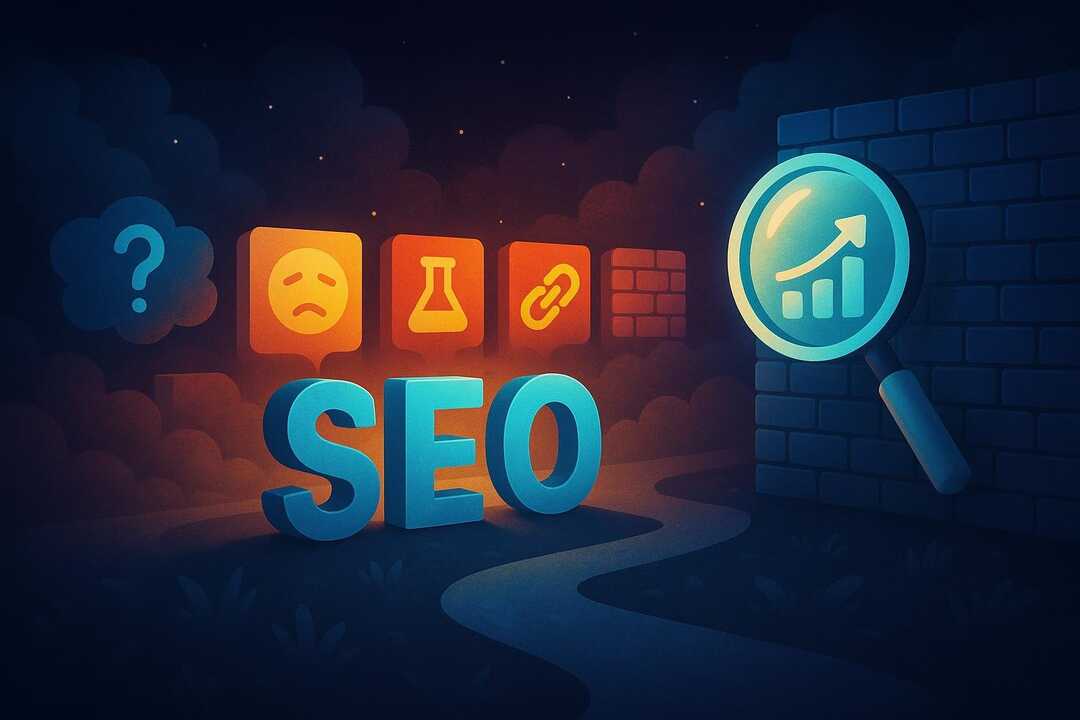
Across the five psychological barriers, fear of risk often looks rational, yet it quietly kills long term enterprise SEO gains.
Fixation on Vanity Metrics Hinders Strategy
The trap feels safe. When your team loves flashy numbers, it lets real enterprise SEO gains get buried.
- Raw traffic obsession: Traffic spikes can wow a board slide, yet they rarely show if you buy or move deeper into pipelines. We tie traffic to pipeline value, because often less than 2% of visits become leads.
- Rank fixation: Rank wins feel good, but one head term rarely drives more than 1% of revenue. The fix is intent mapping, where you group pages by deal stage and track leads, demos, and won deals.
- Impression overload: High impressions can fool teams, because broad reach often grows from low intent queries that never help buyers act. There, we filter reports by good clicks, since 1,000 views can still mean zero sales calls.
- Pageview bias: Pageviews rise fast, yet many enterprise sites see 90% of pages drive little search demand. The Harvard Business Review has noted that execs trust keep rate and win rate more than reach alone.
- Dashboard politics: Vanity dashboards also feed office politics, because teams protect their numbers even when buyers stop moving. We reset the scorecard, because a 5% lift in win rate can beat a 50% traffic jump for you.
Resistance to Change Blocks Technical Updates
Once surface level reporting loses its grip, pushback to change becomes the next wall that blocks enterprise SEO progress. It often starts quietly.
- Legacy comfort: Old workflows feel safe, so you keep putting off schema, redirects, and crawl control updates. Knut Illeris argues pushback is personal and systemic, so one objection can spread through the whole stack.
- Approval drag: Enterprise SEO fixes often touch legal, product, and engineering, so even simple releases wait for many sign offs. Bareil 2013 notes failed change efforts often get tied to pushback, and long queues make that pattern worse.
- Identity threat: Some teams hear technical SEO requests as criticism, even when you’re fixing crawl waste or speed. Dent and Goldberg 1999 warned that pushback can hide deeper process issues, not simple refusal.
- Incremental confusion: You get less pushback when updates feel small, clear, and tied to daily work. Vial 2019 and Furr with Shipilov 2019 show digital change may be slow, so you stage fixes in steps.
- Agency remedy: We lower pushback by turning tech debt into plain business risk you can act on. It helps when you see crawl errors, render blocks, and index bloat linked to revenue, labor, and lost time.
Sunk Cost Bias Stifles New Tactics
Most enterprise SEO stalls when sunk cost bias tells you to guard yesterday’s bets. That feels human. After months of briefs and tickets, a weak plan feels won. So teams keep pushing it. The result is stale tactics that block tests with more upside.
In SEO, that bias keeps a bad content model alive after search intent, crawl paths, and buyer needs have changed. You see this a lot. Kahneman and Tversky wrote in Econometrica that losses feel about twice as strong as gains, so your old SEO bets feel oddly sacred.
That is why you may defend a big page template, even while rankings, leads, and user paths keep slipping. It hurts to stop it now. Hal Arkes and Catherine Blumer found in Organizational Behavior and Human Decision Processes that 85% backed a doomed project when sunk costs were named.
In the same study, just 10% chose the project when the old spend was left out. There’s a lesson here for your SEO team, because you can feel your weak taxonomy makes a better one feel wasteful after you built it.
Ohio University found the same pull in real life, as full price theater buyers attended 4.11 shows versus about 3.3 for discount buyers. Across business, United States IT project continuation wastes $50 billion to $150 billion a year, and managers spend 17% of their time on weak performers.
If you want new SEO tactics to work, we help you judge each test by future return, so past effort stays in the past where it belongs.
Trust Deficit Lowers Collaboration Efficiency
Trust gaps make SEO teams second guess data, sign offs, and shared goals across large organizations. It slows handoffs, and you then spend more time proving value than moving work forward.
- Familiar systems calm doubt: People already trust payroll, finance, and team tools, so SEO insight lands better inside known platforms. The trust gap shrinks because you see the work where you already make your daily calls.
- Clean data earns trust: A weak data set makes reports clash, which makes you question each tip you share. There’s more buy in after you clean data sources and align core systems.
- Workflow integration builds teamwork: Trust rises when AI supports full workflows, not single tasks that end in more manual checks. It helps content, legal, and dev teams move together because you can see the handoff trail.
- Trust reduces drag: Harvard Business Review says high trust workplaces report 50% higher productivity, which has clear SEO workflow effects. The same research found 74% less stress, so you tend to move reviews with less friction.
- Clear proof ends debate: You build trust faster with steady outputs, plain dashboards, and shared rules for content, data, and sign off. There’s less debate because you can trace what changed, why it changed, and who signed off.
Real progress starts inside. Enterprise SEO stalls when you protect comfort and skip change. That pattern kills momentum. Fear of risk, status bias, and silo thinking will slow each win. In addition, weak ownership and short term thinking can turn sound SEO plans into long team deadlock.
Agencies fix what teams miss. Organic search still drives 53% of trackable web traffic. We use that fact to build urgency, calm doubt, and move you and your stakeholders from debate into action. Clear goals, shared proof, and outside help will guide you as you turn stalled SEO work into steady business gains.
That is where we can help.