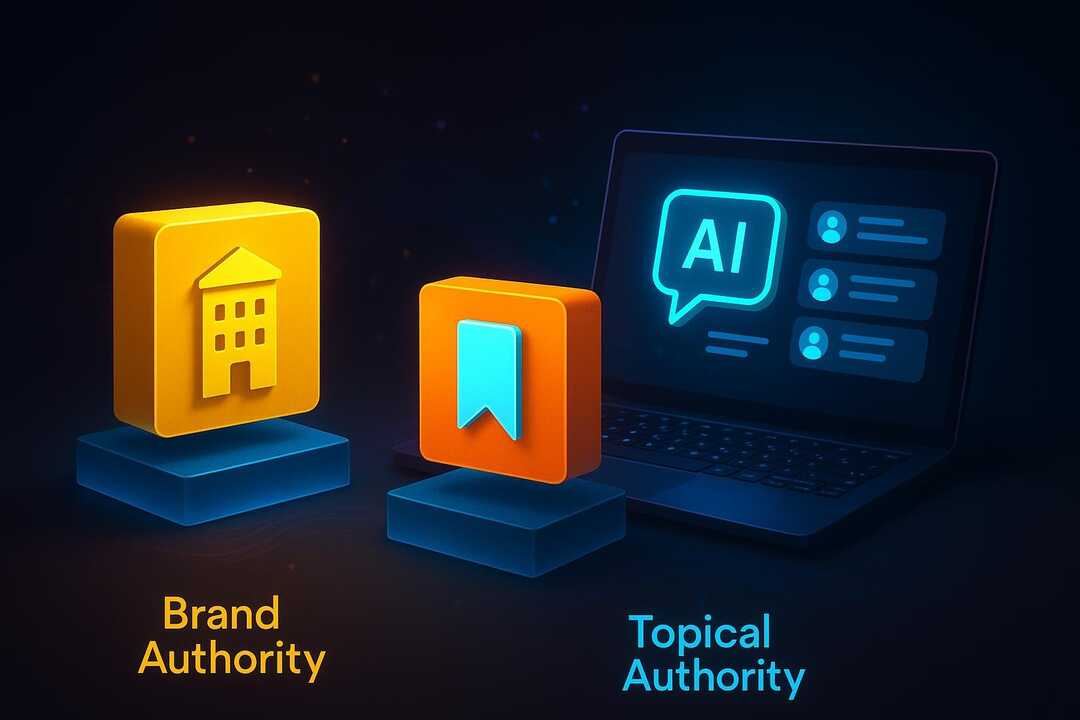
Authority drives AI answers, but brand and topic signals work in different ways. Your brand builds trust, while your content shows real know-how. Meanwhile, AI checks mentions, links, and cites. New data shows 58% of shoppers use AI tools for research, which lifts the worth of trusted brand signals.
Table of Contents
For more AI search reach, you need steady, strong content and a smart mix of both, so you start with brand trust and sight.
Brand Authority Enhances AI Search Visibility
AI search changed what you see. Your brand authority beats topic depth here, since it guides which sources AI cites.
- Citation placement: Strong brand signs help Google AI Overviews cite you in side panels, beyond old blue links. The source list matters because zero click answers often end the visit before you reach your chosen site.
- Trust over fame: Brand awareness makes your name known, yet authority needs third party proof that you give solid answers. Reuters and major legal publishers note that AI tools favor proven sources when you show clear authorship and steady mentions.
- Answer engine effect: Topic depth helps AI get a subject, but brand authority decides if you earn the cite. If your pages act like an answer engine, you have a better shot that AI will show you first.
Topical Authority Establishes Subject Matter Expertise
The case gets clear fast. Topical authority shows readers and AI systems that you know a subject with proof, context, and useful answers over time.
- Proof over volume: You build know-how when your pages answer linked questions with examples, proof, and plain words. It shows depth, while thin posts can read like 2,000 word filler that no one asked for.
- Signals from others: You get stronger proof when experts cite your work, journalists mention it, and groups talk about your findings. Many teams chased 4 to 8 blog posts each month, yet real know-how needs proof you can cite and clear examples.
- AI reads the trail: A Stanford HAI report found source quality shapes trust, so AI systems will favor pages with proof you can check. That means you need facts, named sources, and first-hand insight, because they make your know-how look earned.
AI Systems Prioritize Brand Mentions and Citations
Search systems weigh repeat name drops and clean cites as trust clues. That matters in brand authority vs topical authority because broad cover alone may leave your name out of the answer.
- Frequency across trusted sources: Here%2 is a simple reason repeat mentions matter: you learn from patterns seen across thousands of pages. The Stanford HAI report notes many base models train on trillions of tokens, so repeat refs gain weight. If your site covers a topic well but few outlets name you, there’s less recall for your name.
- Citations as confidence signals: It also helps when you see top pubs cite your data, because sourced facts are easy to check and reuse. Reuters Institute reported 40% global trust in news in 2024, so source names still shape felt safety. In one messy coffee shop search, you have seen vague claims get brushed off while named sources kept their place.
- Brand recall affects final answers: One broad hub with 50 articles can still lose if outside sources rare name your brand. There are days when you read ten look alike posts, yet one cited brand sticks in your head. That is why brand authority can outrun topic cover when both pages answer the same question.
Topical Authority Boosts SEO Rankings and Content Depth
Beyond outside mentions, your brand signals need real topic depth before AI search gives you more space.
- Focused clusters cut waste: Google says low value URLs drain crawl time from pages that matter. That is why tight topic groups help your best pages show up, so you don’t compete with your own pages.
- Depth beats sheer output: For years, more pages worked because keyword match rules paid off broad reach and less tough competition. It now fails more in AI search because Overviews take clicks from info searches.
- Smarter libraries age better: Programmatic SEO once made thousands of pages, yet big libraries now bring upkeep, overlap, and rank drop. You rack up content debt, and they feel like packed closets where each page still needs care.
Brand Authority Signals Trust and Recognition
Seen next to deep topic coverage, brand proof tells systems who people trust.
- Entity recognition: Google now maps entities across the web, so repeated mentions help your name feel real and known. That matters in AI search because you can build trust even when a citation brings no link.
- Editorial context: A mention in Reddit threads, YouTube reviews, or expert roundups adds proof if you keep the context positive. Modern systems can spot fake link patterns with near 100% accuracy, so real coverage carries more weight.
- Reputation network: Reviews, citations, and news mentions work like a trust web that supports your topic depth. There’s a clear split in AI search: you earn attention with strong subjects, while recognized names keep it.
Topical Authority Demonstrates Comprehensive Topic Coverage
Clear topic coverage gives you a better shot at cites because AI tools like sources that answer one subject well. That depth also lasts.
- Breadth across the same topic: AI systems give direct answers, so they reward pages that solve your quick Monday morning question and your deeper follow ups. In brand authority versus topical authority, this is where coverage gives you real weight before fame fills gaps.
- Entity rich structure: Clear headings, bullet points, and plain terms help AI sort entities, links, and intent with less guesswork. It will cite clean pages more often because you can trace each answer with ease.
- Data backed coverage: SparkToro and Similarweb found 58.5% of US Google searches ended without a click in 2024. There, broad topic coverage can win zero click visibility because AI may match you to its best answer.
- Trust grows from proof: Real data, case details, and cited reporting from Forbes, WSJ, or Bloomberg make your topic map feel safe. That proof helps AI choose your page, since trust sits at the core of GEO.
- Gaps tell AI to look elsewhere: If your content skips key questions, they will pull from another source that covers the missing parts. That is why you should track GEO webinar updates and refresh clusters for your strong long term digital position.
AI Search Favors Brands with Established Authority
That fuller topic view sets context here.
- Baseline credibility: Big brands start with more basic trust because models have seen their names in training data and in cited sources. LBB notes that you get more views after you prove you fit, so a known name helps most when your answer already fits. Topical fit still decides inclusion.
- Answer assembly: It pulls answers from clear, useful, and relevant sources. They don’t rank pages. That is why you can beat bigger names with a clear structure.
- Your next move: There are three signals: semantic fit, new info gain, and trust cues like skill, trust, and steady results. So your goal is that you show up in many prompts, not one rank. It helps, then fades.
Balancing Brand and Topical Authority Maximizes Impact
Brands win more often when brand authority and topical authority work together in AI search. Reuters and Pew Research Center both show that AI use is going up for answers and choices.
- Lead with clear relevance: Your name can open the door, but topic depth tells AI tools to use your work. The same prompt may return different answers, so there’s no fixed first place to protect. You get more impact when you show up with clear explanations, new data, and a clean layout.
- Build content that earns citation: AI models build answers from many sources, and they like pages with clear meaning across one theme. There are three strong cues: depth, info gain, and trust from steady expert signs. If you answer the next question before readers ask it, they trust you more, and your content is easier to quote.
- Tie recognition to topic clusters: You get the best results when your brand pages back focused guides, glossaries, studies, and useful side-by-side tools. It helps because old-school search still drives traffic, while AI tools now shape how you size up and buy. Your reach grows when people know your name, and the model also gets your topic.
Building Authority Requires Consistent Quality Content
- Why consistency matters: From that overlap, steady publishing gives AI systems clear patterns to cite across brand trust and topic depth. In 2025, direct answers and AI summaries are replacing blue links, so your steady content matters more.
- What steady quality looks like: Build topic clusters that answer how, what, and where questions across the full buyer path. There, Google AI Overviews and ChatGPT favor clear facts, lines you can quote, and linked pages when you keep them fresh.
- How you measure progress: We track branded queries in Google Search Console and watch citations across ChatGPT, Perplexity, and Google AI Overviews. If mentions rise and engagement holds, your content is earning trust because it answers your next question.
Real trust wins here. In AI search, authority now works on two levels. Brand trust earns fast inclusion. Topical depth then proves you can answer each next question with care. If you build one without the other, AI systems may cite you once but will hold back from trusting you over time.
This gap can therefore cost reach. When your name carries real trust, AI can cite your content again across many prompts and answers with trust. When you also cover a topic with depth, AI can link your pages to your know-how with more trust.
So your next move should join brand building with topic coverage. We win by earning both, then scale with depth.