
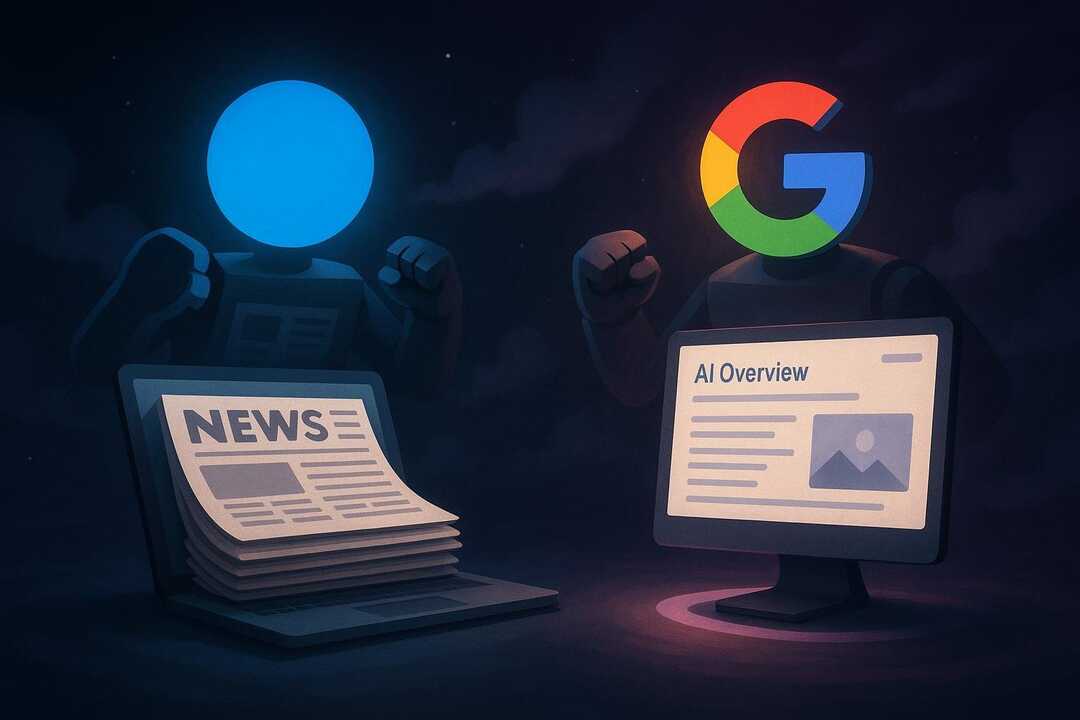
USA Today fights for search clicks. Google AI Overviews can answer news queries right on the results page, which may cut visits when you stop before you click. As a result, that puts USA Today up against a search layer, not a newsroom.
Table of Contents
Publishers lose leverage first here. You need to track visibility, click share, and brand demand so you can judge who wins. That starts with a clear look at Google AI Overviews and the traffic plan you will need.
Here are GEO-ready subheadings:
These are GEO ready subheadings for this news traffic fight. You can ask why clicks drop when AI answers show up before the news link. You can also ask what you miss when short sums replace full reporting.
There’s also room for why your trust stays with deep reporting. Reuters Institute has shown that you still often find news through search. It helps when you can parse ad loss and link risk fast. Those subheadings keep USA Today versus Google AI Overviews clear for answer engines.
What Are Google AI Overviews and USA Today Traffic Strategy
AI Overviews are Google search summaries. You see them above links, and you often see them on news searches. This cuts clicks. Digiday said one newsroom found AI Mode had “everything open to it” on the topic after 10 minutes.
Barry Adams said they often show up within about four hours. Alicia DelGallo said you use shell files and prewrites plus fast updates, and you help your Winter Olympics coverage hit 116 million page views.
There, their trust grows with bylined reporting.
USA Today vs Google AI Overviews Comparison Table
This table compares four traffic flashpoints in the news fight.
| Point | Publisher side | AI Overview side |
|---|---|---|
| Clicks | Needs visits | Can cause “Google Zero” |
| User path | You leave Search | You stay on Search |
| Control | No clean opt out | CMA proposed publishers “opt out” and stay listed |
| Regulators | Traffic loss hurts news models | European Commission probes use “without appropriate compensation” |
How Google AI Overviews Redirect News Traffic to Publishers
In that fight, AI Overviews pull away many news clicks. Across publishers, you see organic search traffic drop 42%, Define Media Group reports. However, breaking news resists that. Since November 2024, you’re up 103% across Google surfaces.
There, your news searches trigger AI Overviews just 15% of the time, and terms like Iran war go to Top Stories. That is where you still win. Finally, Define Media Group says Discover now matches web search traffic, so if you’re fast, you keep more visits in the fight.
Steps USA Today Must Take to Compete with AI Overviews
Use these five steps now.
- Audit pages that target “what is,” “how to,” and comparison searches. Stackmatix found AI Overviews on 58% of results pages.
- Rewrite top stories with your notes, named experts, and fresh on-site detail. What you see is harder for summaries to copy.
- Put clear answers and key facts near the top. DataSlayer reported a 61% organic click through drop when an overview appears.
- Push harder on local, live, and high intent coverage. WordStream says you now see zero click searches make up a major share of queries.
- Grow email and app habits you control. Institute of Business AI says your 2,000 person list can cushion a 40% traffic loss.
Pros and Cons of Relying on Google AI for News Distribution
Next, you should weigh four risks if you lean on Google AI in the news traffic battle.
- Speed pressure: Digiday said the search window is shrinking, so you may rush weak stories.
- Click loss: Barry Adams told Digiday AI Overviews can show up within about four hours, cutting your visits fast.
- Platform dependence: If Google answers your query, you lose direct visits while their data stays there.
- Depth tradeoff: Digiday reported teams publish “while search interest is still rising,” so you may miss key context when it matters.
Common Questions about USA Today’s Role in AI-Driven Search Results
After that tradeoff, you still need three answers on USA Today’s fight with AI overviews.
- Do summaries cut clicks? Usually, yes. Pew Research Center found you get nearly half as many clicks from Google’s results page when an AI summary shows up.
- What earns citation? GEO likes trust, set data, and brand mentions because they help models trust what you share.
- Why does it matter? You can see a clear shift in queries. A 2025 study found you ask full questions in LLMs, not short keywords.
When USA Today Traffic Drops Under Google AI Influence
Traffic drops first on evergreen and service searches. So your concern becomes real. Smartocto, which looked at 400 plus news outlets, found no clear drop in search, yet magazine clicks fell against views on service topics.
As a result, the loss can feel sudden. Femke Simons told Smartocto the top hit to total reach at news sites is 1% to 5%, mostly at the article level. TechCrunch says Discover changed too. So, in this battle, you will track both your traffic paths.
Process for Optimizing Content to Beat AI Overviews
Five steps help you compete.
- Answer the main query in the first lines. It gives you and readers a clear takeaway.
- Add a byline, date, and cited facts. Google Search Central says no special markup is needed for AI features.
- Use question headers with plain answers. That makes one clean part easier for you to pull.
- Publish original reporting, quotes, or data. Fresh proof gives your page a better shot to win the click.
- Refresh pages that lose search demand. It keeps facts fresh and cuts filler that weakens trust.
News clicks now face stress. Google AI Overviews will take many quick answer searches. However, USA Today keeps more value when you add new facts, trusted reporting, and reasons for you to leave the search page.
That is the tradeoff. Broad explainers face more risk, while you hold clicks with news no one else has. You still control depth and loyalty. Still, you will need strong headlines, trust, and loyal readers.
Finally, review your stories by query type, then decide where you chase search clicks and where you build direct audience demand.